Let’s Talk Reformer Pilates. What Makes A Good Form?
Form matters. Game changer adjustments to see progress in your pilates practice.
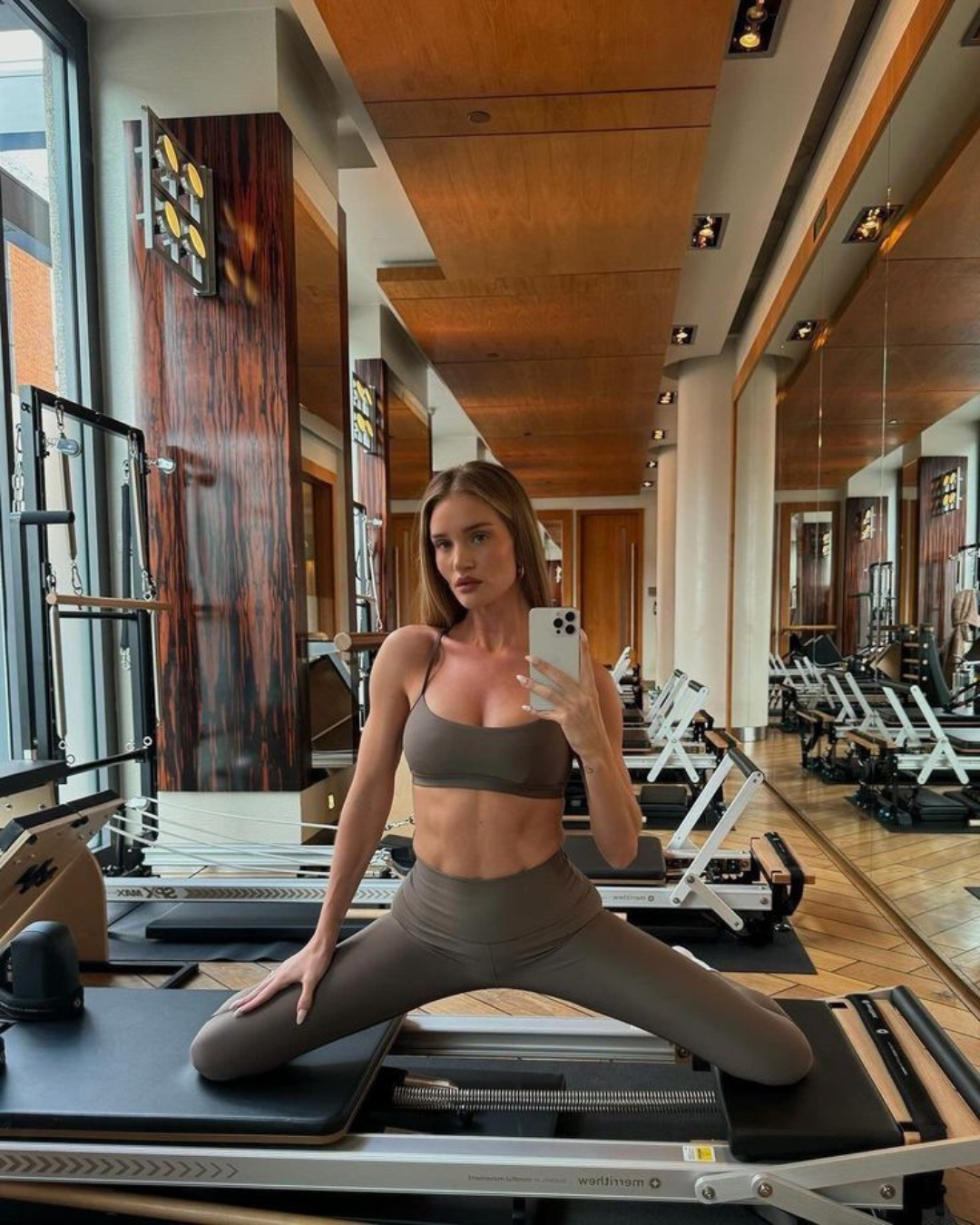
Instagram @rosiehw
I remember when I first found Pilates, it felt less like exercise and more like a homecoming. It was the first movement practice where I actually felt present in my own body. Where the smallest tweaks made the biggest difference, and where progress was defined entirely by technique rather than reps or speed or how much weight I could move from point A to point B.
You don't get faster at Pilates. You don't get stronger in the way the gym measures strength. You just get clearer. More specific. More aware of the millimeters that matter. And the thing about these small tweaks? They're almost invisible until you learn to see them. Until someone points them out, and suddenly your practice splits into before and after.
The Feet
There's a moment in every footwork series where you can tell who's really there and who's just going through the motions. It happens in the first few reps, and it has nothing to do with flexibility or strength.
Some people place their heels on the bar (good) but then let their arches creep up onto it. Suddenly they're balancing on the bony part of their foot, and from that position, it's biomechanically impossible to achieve a true, deep flexion. The foot can't do what it's supposed to do because it's not where it's supposed to be.
Others get their heels in the right spot but then check out entirely. The feet go along for the ride, passive and floppy, as if they're just accessories while the legs do all the work.
Here's what I wish someone had told me on day one: a flexed foot isn't about the toes. It's about pulling the top of the foot back toward the shin. Imagine showing someone the bottom of your heel. That tiny intention changes everything, it fires up the entire front of the lower leg and creates a line of tension that travels all the way up to the hip.
The same goes for pointing. When you're on your toes, what's often called "high heels", the tendency is to let the feet collapse the moment the legs straighten. And look, I understand: keeping your heels high when your legs are fully extended is genuinely difficult. But you can absolutely start and end each repetition with intention. You can arrive at full extension with the feet still awake, still engaged, still part of the conversation.
The Knees
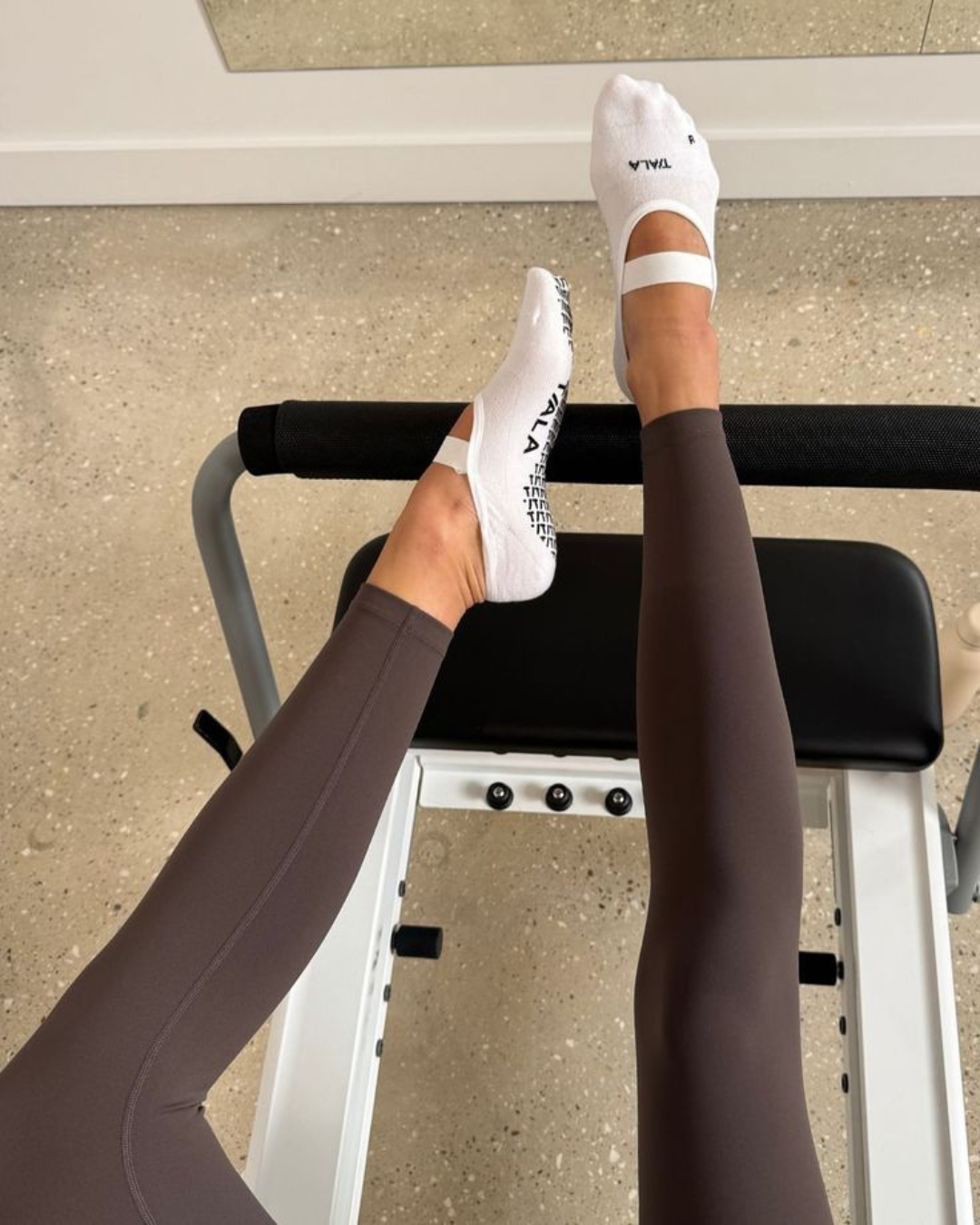
Instagram @wearetala
I used to lock my knees all the time. Straighten the leg, let it go all the way back until it couldn't go any further, feel that little *click* or *pop* and think, okay, good, I'm done.
It took me years to understand that clicking sensation wasn't my knee saying "good job." It was my knee saying "please stop."
If you're hypermobile, you know exactly what I'm talking about. That lockout at the end of straightening your leg. The problem is, when you lock, you're using the joint itself as the stopper instead of your muscles. You're letting your bones take the weight so your hamstrings and quads can take a break. And sure, it feels fine in the moment, but over time, that's how you wear down cartilage, stretch out ligaments, and invite all kinds of ache and pain into a joint that was just trying to do its job.
The fix is infuriatingly simple and hard at the same time: don't lock. Straighten your leg, yes, but stop just before the end. Leave a millimeter of space in that knee joint. Imagine you're straightening your leg through honey, or warm caramel, and the goal isn't to reach the bottom but to feel the resistance all the way through.
The Tabletop
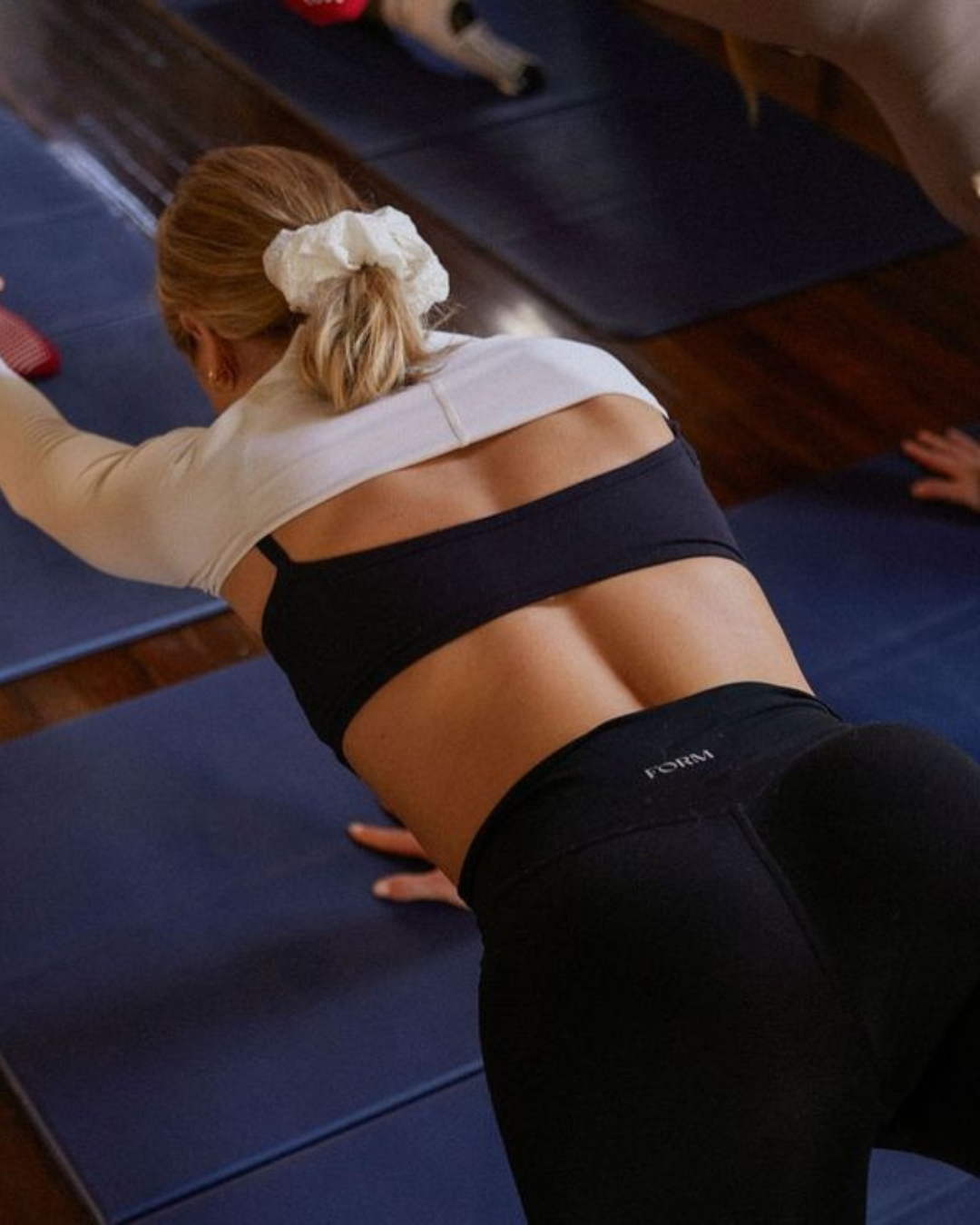
Instagram @shopstakt
Tabletop position is supposed to be a resting place. A neutral home base. And yet it's where people unintentionally sabotage their lower backs more than anywhere else.
The ideal is a clean 90 degrees at both the hip and the knee. But watch what happens over the course of a few breaths. The feet start to drift down toward the glutes. Just a little. And as they drift, the knees drift forward of the hips. Suddenly that 90-degree angle is gone, the deep core engagement has softened, and the lower back is taking on work it was never meant to do.
The fix is so simple: bring the feet back and re-establish the angle. It's all about core awareness. And once someone points it out, once you feel the difference between a dropped tabletop and a supported one, you can't unfeel it. You start self-correcting without being told.
Core and Breath
I spent years thinking core engagement meant sucking everything in and holding it tight. Suck and hold. Breathe shallow. Survive. It wasn't until someone talked about the breath as the thing that activates the core rather than the thing you do despite the core that everything shifted.
The breath is what wakes up the natural corset. The deep, wrapping layer of muscle (transversus abdominis) runs horizontally around your torso like a built-in belt. It doesn't engage by sucking in. It engages on the exhale, when the diaphragm rises and the pelvic floor gently lifts and those deep fibers can wrap around your center.
Try it, lie on your back, knees bent, feet flat. Place your hands on your lower belly. Inhale, let the breath expand into your ribs and back, feel the belly soften. Then exhale slowly through your mouth, and without forcing or clenching, notice what happens.
The breath isn't separate from the movement. The breath is the movement. Inhale to prepare, to lengthen, to create space. Exhale to engage, to wrap, to support.
The Philosophy
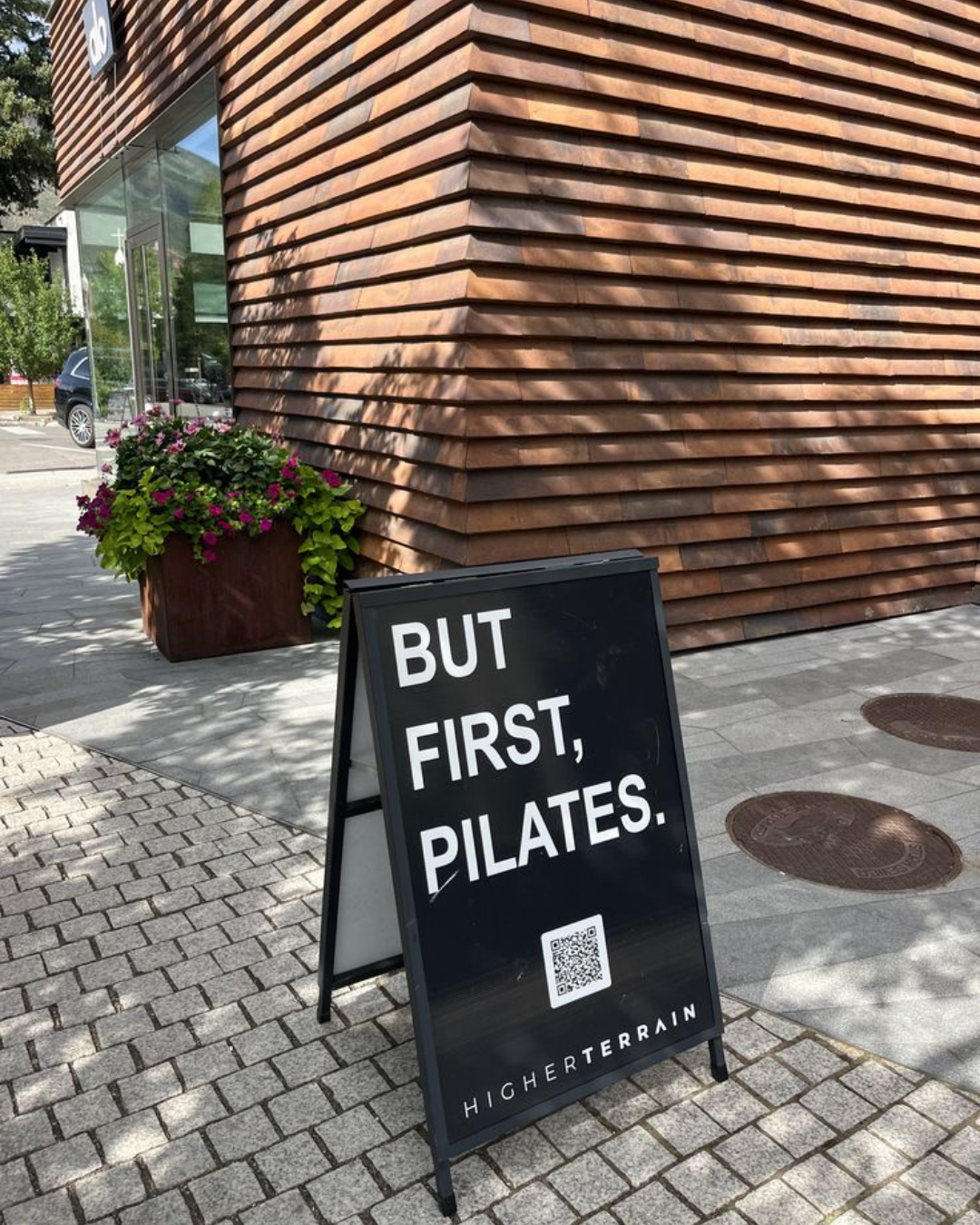
Instagram @sagespodak
Joseph Pilates wrote in Return to Life that if you do the mat work every day, even just fifteen minutes, you'll naturally want to do it longer because it feels so good. The equipment, as he conceived it, was simply a tool to help people understand the mat work better. A means to an end.
So how did we get here? How did a fifteen-minute daily practice become an hour-long class with branded socks and waiting lists?
Partly, it's because it's hard. Moving with this level of intention is counter to every habit modern life reinforces. People seek out guidance because they want someone to answer their questions, to keep them accountable, to help them understand what they're supposed to be feeling. I started pilates originally because I wanted to understand the work deeply enough that I wouldn't need someone else to guide me anymore. Years later, I'm still learning, and I still love being guided.
The Seeing
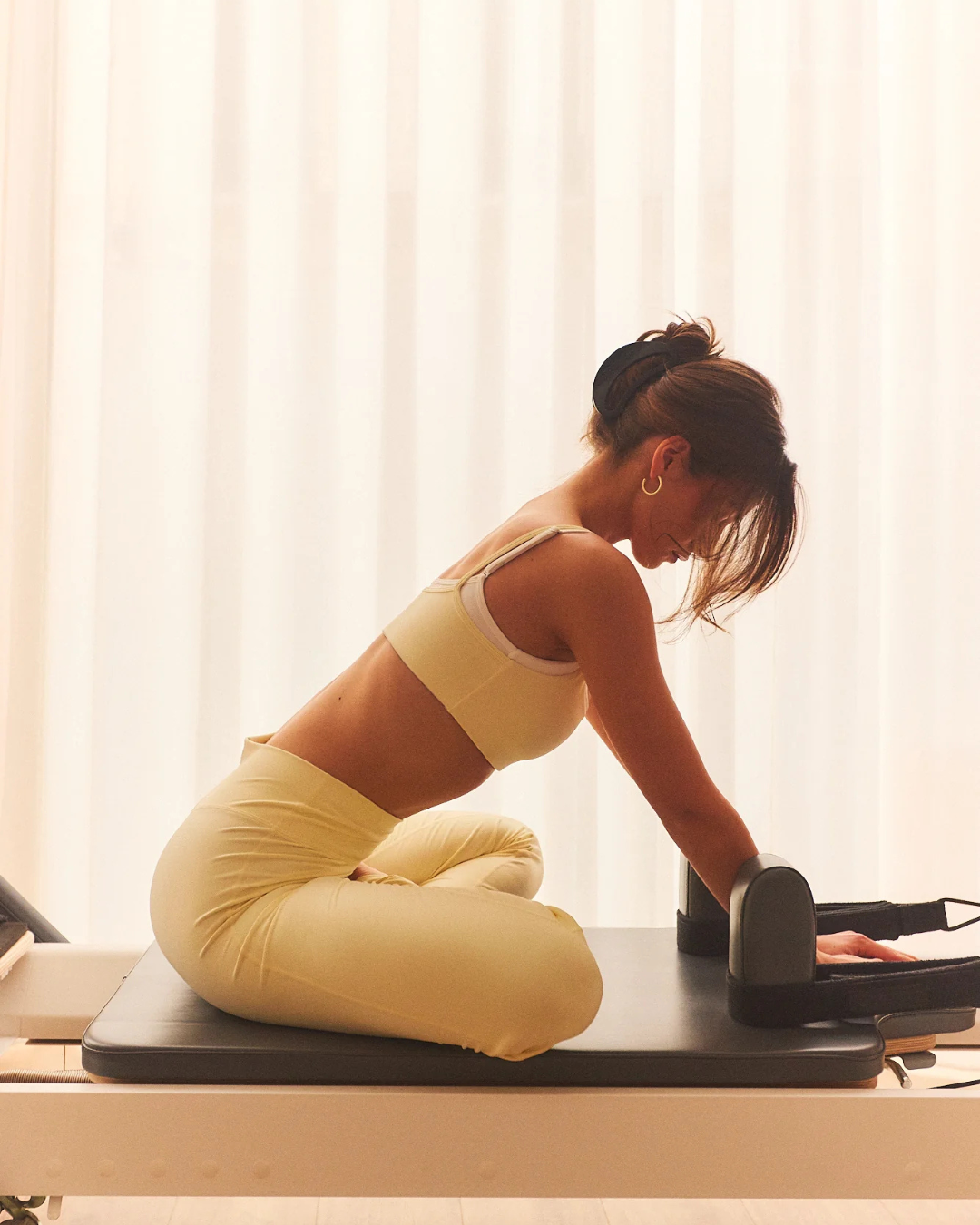
Instagram @exercere_
When you watch someone move, you can start to see the difference between connection and just going through the motions. Watch how they stand in their feet during footwork. Do their ankles roll out? Do their knees hyperextend? Do they seem to understand how to engage their hamstrings and glutes to extend the hip, or are they just dumping into the lower back?
What's hard to watch is panic. A body that looks tense, gripped, terrified. Someone holding their legs up in Teaser by leaning back and clenching their hip flexors like they're hanging off a cliff. It looks like it feels terrible, and it probably does.
The goal is to find the effort that doesn't feel like a fight. To learn that there's another option, a more connected, more intelligent, more peaceful way to move. That's the game-changer. That's what makes the millimeters matter. And that's why, once you feel it, you keep coming back.