How Catching The Morning Light Can Recharge Your Circadian Rhythm

Instagram @adrienne__earth
Sleep is an essential pillar of our overall health. It is a vital period for our bodies to regulate hormones, repair tissue, and maintain emotional stability. Getting 7–9 hours of quality sleep each night plays a huge role in how we think, feel, and function day to day. This is why it’s so important that we don’t neglect it.
Yet it’s something that many of us struggle with, myself included. In modern culture, sleep is often portrayed as a hindrance, leaving less time to work, to hustle, and to socialise. This can create the illusion that sleep is an unnecessary waste of time. It’s all part of the fast-paced “go, go, go” attitude that modern life presents to us. Social media and our phones are also major contributors to our state of chronic wakefulness. Our inability to switch off and remove ourselves from blue light exposure before bed can greatly affect our sleep quality. In a world full of distractions, how can we ensure we get good-quality sleep?
Our body has a natural way of knowing when to sleep and when to wake up. This is called our circadian rhythm, also known as our internal 24-hour clock. It regulates our cycle of alertness and wakefulness by responding to changes in light within our environment. Our bodies rely heavily on routine and light signals to tell us when to wake up. This is why it’s so important to go to sleep and wake up at consistent times. With modern-day distractions, many of us find our sleep disrupted, making it more important than ever to prioritise good quality rest. Morning light plays a key role in this. It signals to the brain to reduce melatonin and increase cortisol, helping us to feel more awake and setting our body clock for the day ahead.
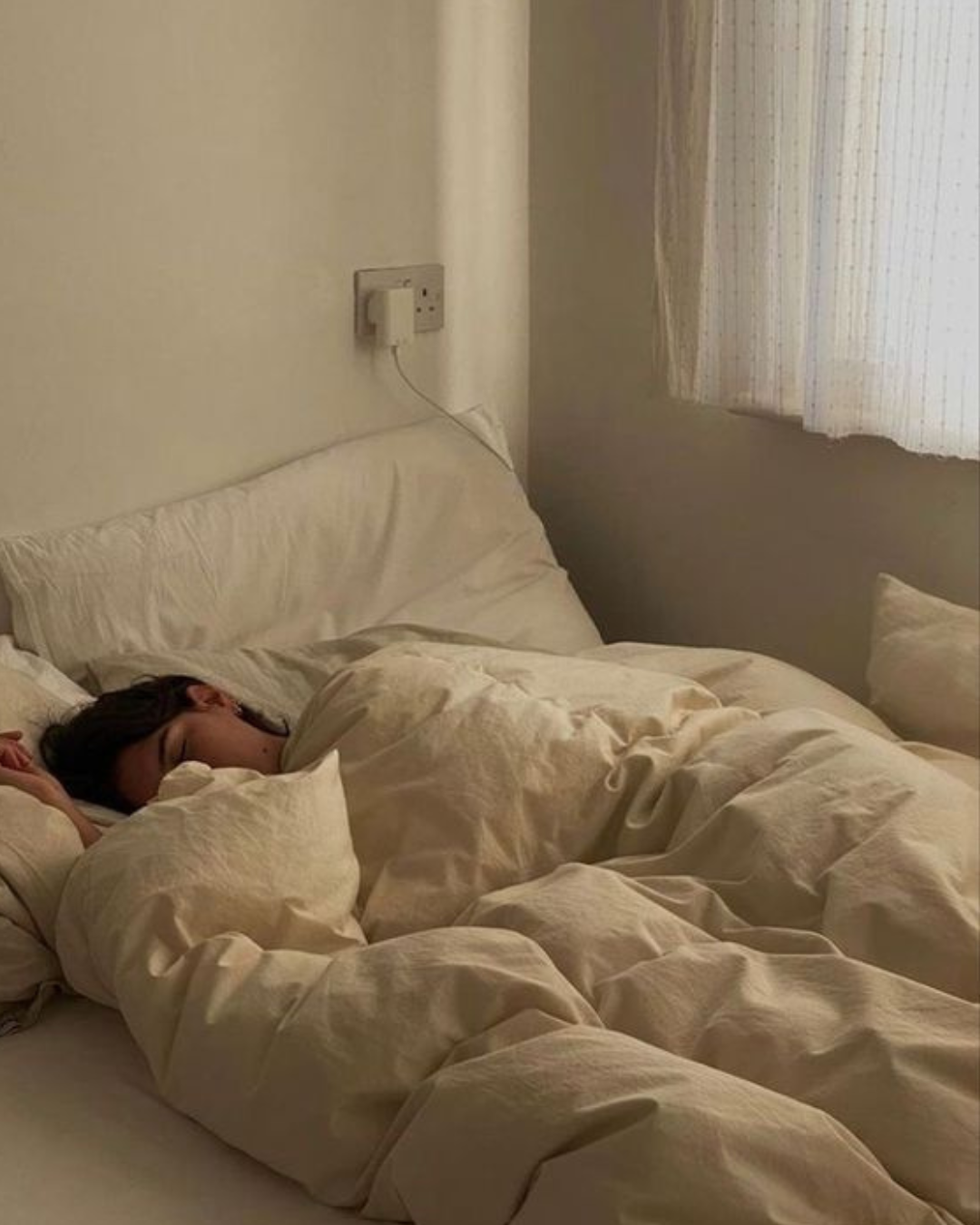
Before artificial lighting and alarms, we naturally woke with daylight. The sun was, and still is, our body’s natural cue for waking. Now we’ve become so reliant on alarm clocks that it can feel unsettling to go without one, for fear of waking up at the wrong time. The issue is that we often reach for our phones immediately, which can disrupt the start of our day and our overall focus. The same applies at night, with the habit of scrolling before bed and exposing ourselves to blue light that can significantly reduce sleep quality.

Pinterest @rhianameri
I’ve been experiencing this myself recently. It’s a common habit, but I’ve noticed how much it disrupts both my sleep and my mood. When I came across the idea of supporting my circadian rhythm by getting morning light, it made sense for me to try it. I decided to test it for a week to see if I could regain a healthy sleep pattern and move towards a more natural way of waking up.
My goal was to go to sleep at 10pm and wake up at 6am, aiming for a full 9 hours of sleep. I still used an alarm to begin with, but I placed it further away so I wouldn’t be tempted to scroll. This forced me to get up immediately, open my blinds, and expose myself to natural light. I then stepped outside for a few minutes each morning to fully absorb the light on my body.
Here’s how my week went:
Monday – Went to bed at around 10:30pm and woke up at 6am. I felt tired and wanted to go back to bed, but I got up, opened the blinds, and went outside.
Tuesday – I stopped using screens about 30 minutes before bed and read a book instead. I found it much easier to fall asleep this way. I still struggled slightly with waking up, but I continued the same morning routine.
Wednesday – By this point, avoiding screens before bed felt more natural. My evenings felt calmer, I slept more deeply, and waking up felt much easier.
Thursday – I felt noticeably more productive and energised. Stepping outside each morning started becoming a habit, and I could feel the positive effects on both my mood and sleep.
Friday – I decided to go without an alarm. I woke up around 6:30am, which was slightly later than intended, but still close. It felt much calmer waking up naturally.
Saturday – I was less strict with my bedtime, but still avoided scrolling in the evening. I continued to go without my alarm.
Sunday – I continued the same routine and felt much more present and calm before sleep and after waking.
It was the perfect time to test this, as the mornings were bright and sunny. Opening my blinds as soon as I woke up helped signal to my body that the day had begun. Stepping out into the morning light, even for just a few minutes, became a simple, ritualistic habit with positive results. As it’s spring, it felt like the perfect time to reset, both because of the brighter mornings and the sense of a fresh start that the season brings.
When we spend too much time scrolling, we often feel mentally fatigued, which prevents the mind from properly switching off, especially before bed. This week, I wanted to see if I could restore a healthier sleep schedule. Replacing scrolling with reading helped me fall asleep faster and more deeply. Keeping my phone away from my bed reduced the temptation to use it, both at night and in the morning.
Overall, I had a very positive experience. My evenings felt calmer without the constant stimulation of social media, and my sleep became more consistent as the week went on. I felt more present, more focused, and more at ease in myself. It also became something I genuinely enjoyed as it presented a small moment of awareness at the start of each day.
Following the body’s natural processes and aligning with our environment can have a powerful impact on how we feel. Modern technology has made it easy to overlook the importance of sleep, often prioritising productivity over our health.
Our bodies function the way they do for a reason, and it’s important that we don’t ignore that. So give it a go, catch the morning light as soon as you wake up.
Your body will thank you for it.