From Bali to Europe: How a Year in Bali Transformed My House
Pinterest @growwpops
That indefinable "je ne sais quoi" of Bali, it's intoxicating, isn't it? The way the island clings to you long after you've left, through a whiff of frangipani, a flash of emerald green, or the rustle of leaves that feels like a warm hug from the jungle itself. But beyond the personal pull, Bali offers a distinct blueprint for interior design, one that's remarkably consistent whether you're in a buzzing restaurant, a sun-kissed beach club, a tranquil spa, or your own villa. It's an elegance born from art, nature, and sensory immersion, merging high-end luxury with Asian influences in ways that transform spaces into soul-nourishing havens. If Bali's magic has inspired you to rethink your own home, let's decode this blueprint; how it satisfies all senses, turns art into everyday living, and makes nature the ultimate luxury.
The Colour Palette
Instagram @meteora.la
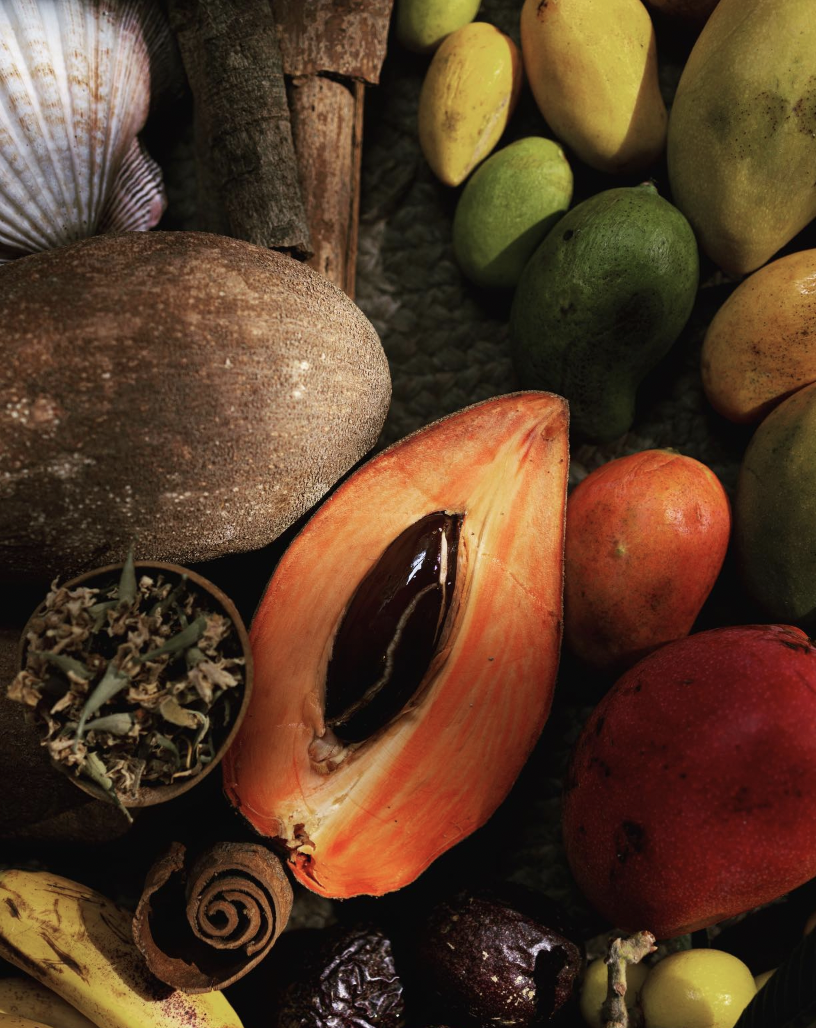
The Balinese colour scheme is a strategic tool for wellness, directly pulled from the island's environment to create a serene atmosphere. The foundation is a spectrum of earthy neutrals: the gray-beige of volcanic stone, the warm brown of sustainable teak, and the soft beige of sandy shores. These aren't just safe choices; they function as a psychological anchor, providing a calm, neutral backdrop that reduces visual noise. This base is systematically enhanced with lush, restorative greens, from the deep emerald of jungle canopies, to introduce a biophilic vitality that has been shown to lower stress. Accents are deliberate and meaningful: deep ocean blues for pockets of cool tranquility, and pops of gold or terracotta, drawn from ceremonial textiles and daily offerings, to add focused energy without chaos. The result is a palette that feels both expansive and intimate, proving that true sophistication lies in a colourscape that works in harmony with nature, not against it.
The Sensory Symphony: Engaging Sight, Sound, Scent and Touch
Instagram @cap_karoso
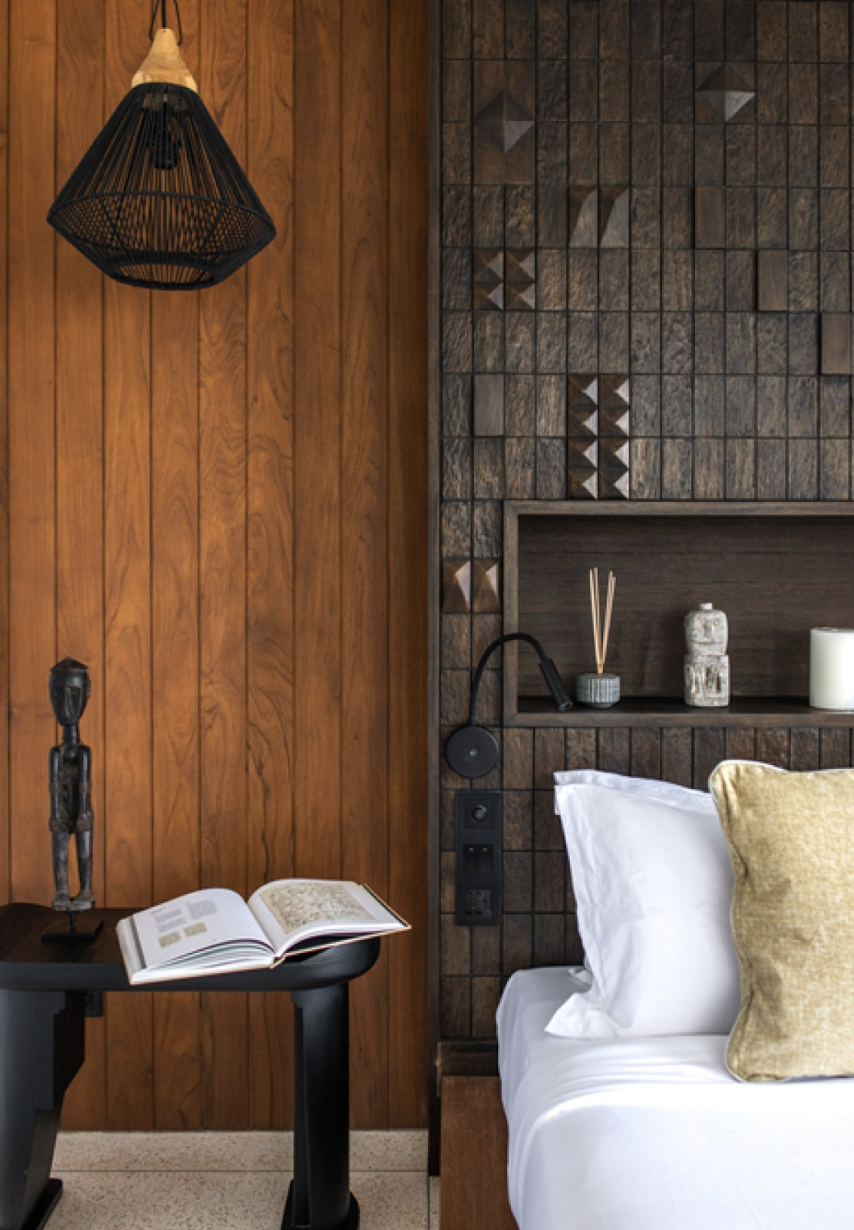
Bali's design isn't just visual; it's a full-body experience that awakens every sense, creating that lingering "home" feeling where the jungle seems to hug you back. The most impactful design principle from Bali is designing for the nervous system, not just aesthetics. True transformation happens when a space is felt, not just seen. This means consciously orchestrating sensory inputs to lower stress and cultivate calm.
Start with sound. Replace urban noise pollution with natural, ambient sounds. A simple tabletop fountain or bamboo wind chimes can mask jarring external noises and ground you in the present moment more effectively than generic playlists.
Use scent with intention. Synthetic air fresheners overwhelm, while single note essential oils like vetiver or sandalwood in a quality diffuser can define a space. Try scent zoning, which means assigning a specific, grounding aroma exclusively to your relaxation area to create a powerful psychological trigger for calm.
Prioritise touch. Incorporate varied textures like a chunky knit throw on a smooth sofa, a stone object on a wood desk, or a natural fiber rug underfoot. This tactile dialogue with your environment pulls you out of your head and into the physical moment.
Finally, master your light. Banish harsh overhead glare. Create soft, indirect pools of light using floor and table lamps with warm toned bulbs and linen shades. The goal is to curate a sanctuary for your well being. By consciously designing what you hear, smell, and touch, your home becomes functional wellness architecture for your daily life.
The Core Philosophy
In Bali, the design ethos is rooted in “Tri Hita Karana”, an ancient philosophy translating to "the three causes of prosperity." This principle outlines three essential harmonies: with people, with spirit, and with nature. A space that neglects these connections can actively work against your well-being.
This isn't merely spiritual theory; it's a practical framework supported by Biophilic Design. Scientific studies confirm that a strong connection to nature within our built environments can reduce stress by up to 37% and enhance cognitive function. The core lesson is that effective design is a holistic experience, it’s not just about what you see, but how a space makes you feel.
Art as the Heartbeat
Instagram @jomque.arq
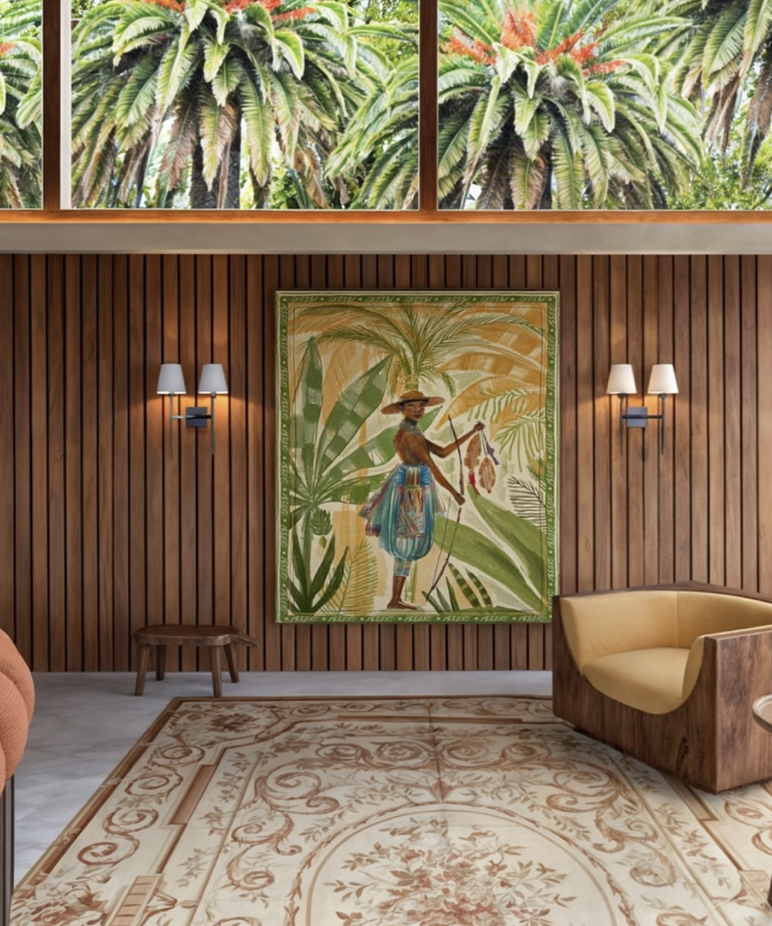
In Bali, art is not a separate category from design; it's the soul of the home. The distinction between a functional object and a masterpiece is deliberately blurred. This transforms a house into a living gallery where every piece has purpose and presence.
The principle is simple: prioritise objects with a story. A single, significant piece, be it a wooden mask or a hand-thrown ceramic vessel, holds more power than a wall of generic prints. This method elevates your space from merely furnished to authentically curated. It’s about creating a home that feels collected, not decorated, where the art you live with contributes to a narrative of heritage and soulful authenticity.
Prioritise Flow and Light
Pinterest @modernstyleline
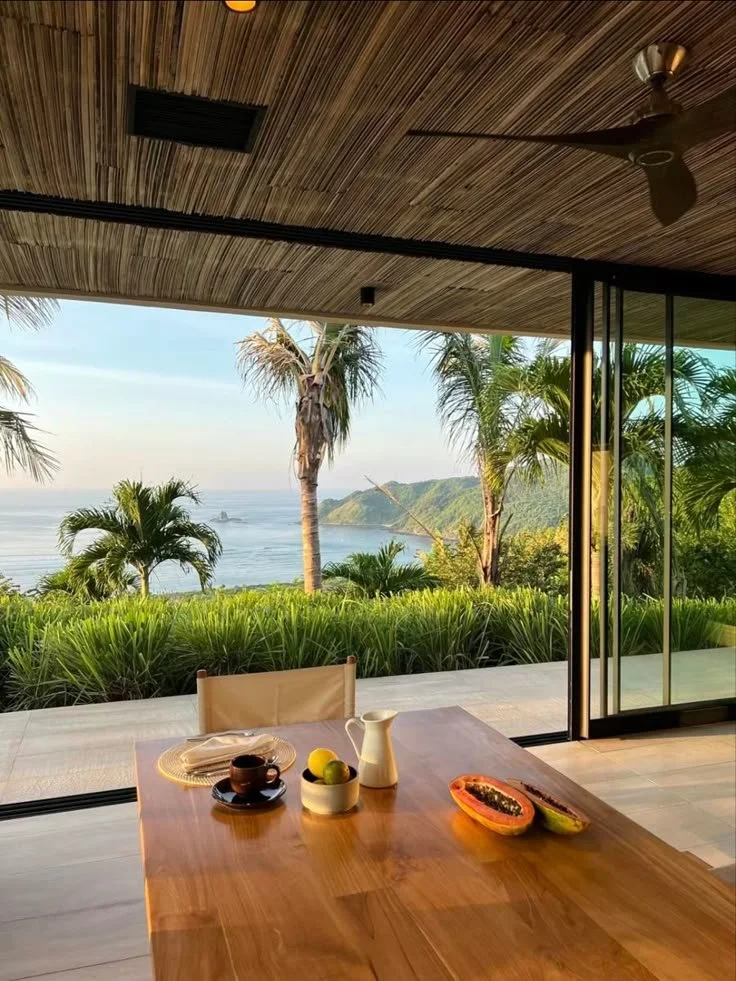
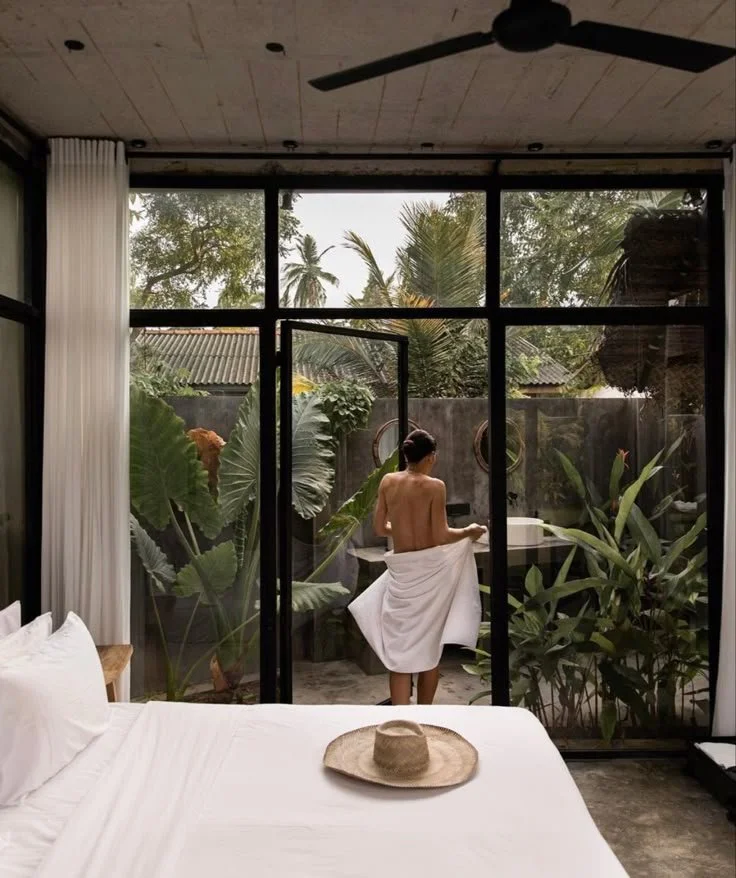
The goal is to dissolve the hard line between inside and out. This starts by treating natural light as a foundational material, not an afterthought. The most effective shift is structural: replace solid walls with large windows or sliding glass doors to flood the space with light and create a seamless visual connection. This principle extends to how we use our spaces. I consistently saw dining areas positioned in open pavilions, making every meal an immersive experience. This invites us to rethink our own routines, to take breakfast on the balcony or host a family dinner in the garden. In practice, this means prioritising an open-plan layout that encourages movement and air circulation.
Materials and Integration for Eco-Luxury
Instagram @bada.studio
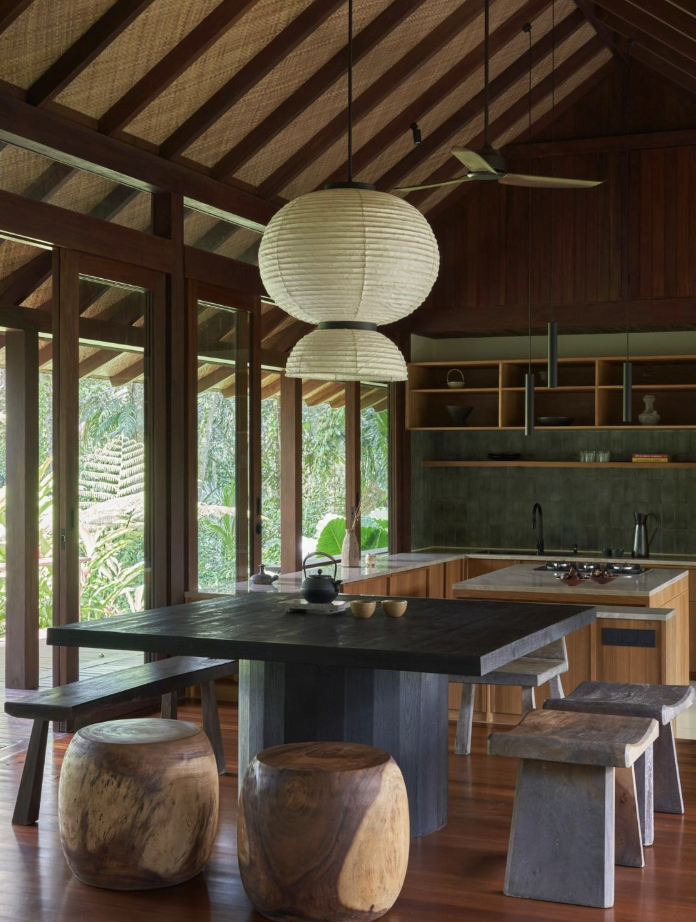
Nature is the inspiration and foundation in Bali's blueprint, seamlessly merging with high-end luxury for sustainable sophistication. Plants are omnipresent: lush ferns, palms, and vertical gardens that purify the air and soften edges, symbolising life and renewal. Materials like acacia wood for furniture, volcanic stone for baths and floors, and bamboo for arches or screens emphasise durability and organic beauty. This eco-luxury vibe proves that true elegance comes from embracing the environment, not dominating it.
Integrate Greenery as Architecture
Pinterest @et0018
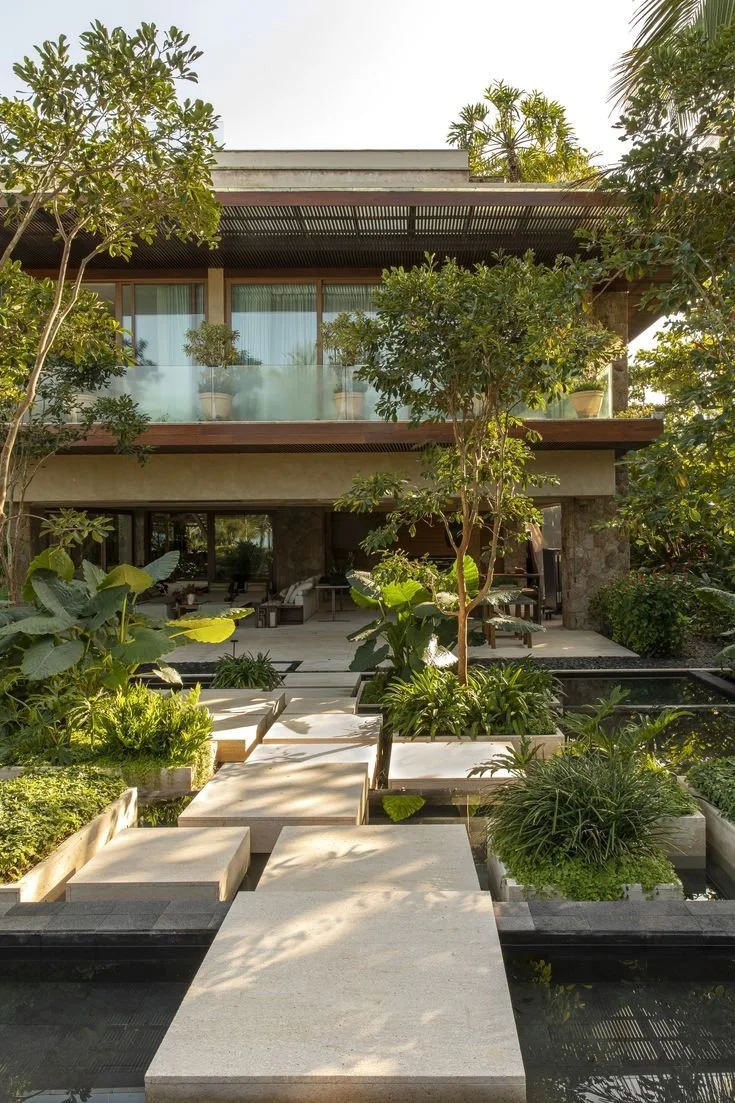
In this design philosophy, plants are not decorations; they are functional elements of the interior landscape. They purify the air, reduce ambient stress, and soften architectural lines. Adopt a "more is more" approach with layered greenery, from large floor-standing palms to hanging ferns and vertical gardens. Use strategic mirrors to amplify the sense of lush abundance.
Ultimately, the true value of this blueprint isn't found in a specific rattan chair or a particular shade of paint. It's a shift in perspective, a commitment to designing for how you want to feel, not just for how you want things to look. By prioritising natural light, integrating organic materials, and curating a meaningful, sensory environment, you stop decorating a house and start building a sanctuary.
This is how you bring the Bali state of mind home: by creating a space that doesn't just shelter you, but actively restores you.