The New Journalling Romance: Why Meaning Matters More Than the Notebook
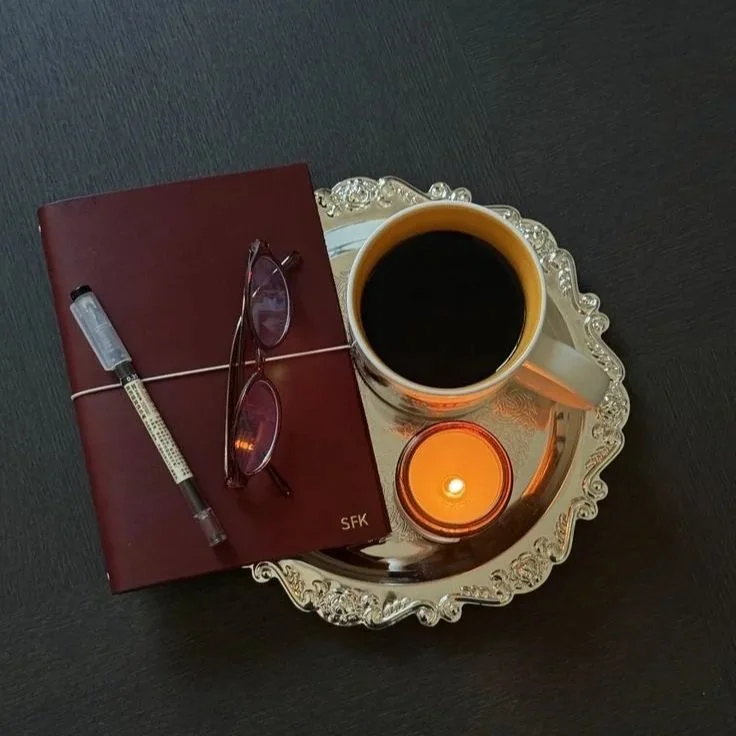
Pinterest @swwaiiir
Beyond the Trend
Scroll through social media this winter and you will quickly encounter a particular image of journalling. Soft Parisian light, café tables, ribbon bookmarks, gold-embossed initials. The trend has taken many to Paris, where customising a Louise Carmen journal has become a ritual in itself, blending travel, craftsmanship, and the romance of stationery. It is beautiful, aspirational, and deeply appealing.
Yet beneath the aesthetics, something more important risks being lost. Journalling, at its core, has never been about the object. It has always been about attention.
Any Notebook Will Do
There is nothing inherently wrong with a beautiful notebook. Craftsmanship has value, and objects we cherish can invite us into practice. But the idea that meaningful journalling requires an expensive journal, a plane ticket, or a curated identity is a modern misconception. Historically, diaries were practical, private, and often messy. They were places to think, to process, to remember, not to perform.
The resurgence of journalling is not accidental. In an increasingly fast and digital world, writing by hand offers a sense of grounding. It slows thought, creates intimacy with one’s own inner life, and allows reflection without interruption. This is what draws people to journalling, not the leather cover or the ribbon marker.
What often goes unspoken in the current trend is that journalling is most powerful when it adapts to the person, not when the person adapts to the aesthetic. A simple notebook, a reused planner, loose pages kept in a folder, or even a small pocket book can hold just as much meaning as a customised journal from Paris.
Multiple Journals for Multiple Purposes
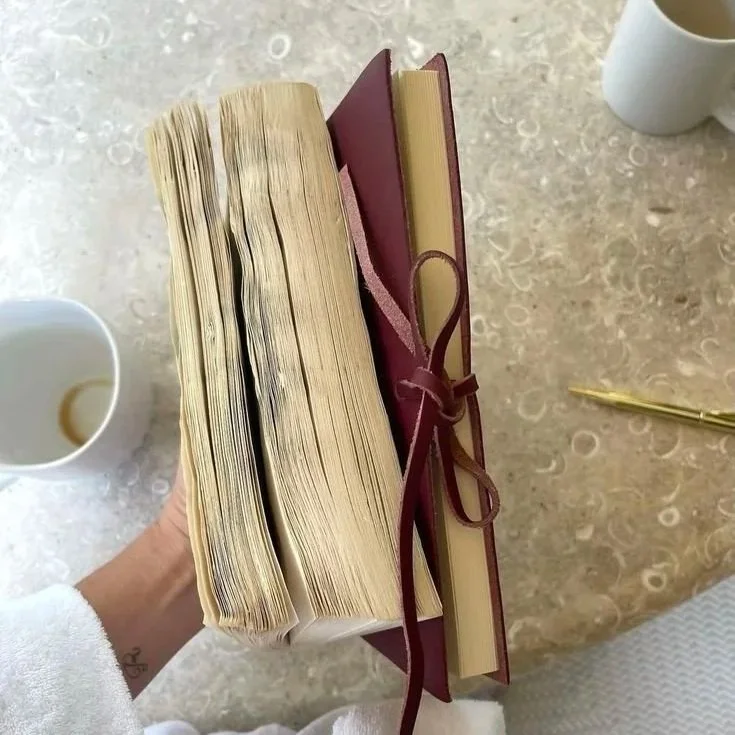
Pinterest @callmeyours__
Many find that having more than one journal allows for greater honesty and clarity. A daily journal may hold unfiltered thoughts, observations, and emotional processing. It can be messy, inconsistent, even repetitive. Its value lies in its freedom. A separate manifestation or intention journal may feel more structured, used for visualising goals, writing affirmations, or reflecting on desires and direction. Itt serves a different purpose, so it naturally invites a different tone.
Others keep a reading journal, where passages are copied out and personal reflections added in the margins. Some maintain a travel journal, not as a record of perfection, but as a place to capture fleeting impressions, conversations, and feelings that photographs cannot hold. There are gratitude journals, dream journals, work journals, and notebooks dedicated solely to questions rather than answers.
Dividing journalling in this way removes pressure. Not every thought must be profound. Not every page must be beautiful. Each journal becomes a container with its own rules, allowing expression without judgement.
Freedom in Practice
Perhaps the most radical idea is that a journal does not need to last forever. Some notebooks exist for a season. Others are filled quickly and set aside. Their purpose is not longevity, but usefulness. When journalling is treated as a living practice rather than a curated artefact, it becomes more sustainable and more honest.
The True Romance of Journalling

Pinterest @valentinalevington
Boa Vida values intention over display. The true romance of journalling is not found in where the notebook was bought, but in how often it is returned to. It lives in early mornings and late evenings, in crossed-out sentences, in pages no one else will ever see.
The Paris journalling trend reflects a longing for beauty, slowness, and meaning. These desires are valid. However, they are not exclusive to a city, a brand, or a price point. The invitation of journalling is simple and democratic: all that is required is time, attention, and the willingness to listen to oneself.
In a world increasingly curated for others, the journal remains one of the last truly private spaces. Whether it costs five pounds or fifty, whether it is leather-bound or dog-eared, its value lies not in how it looks on a table, but in how it holds a life as it is being lived.