The Five-Minute Habit That Rewires Your Brain
The latest wellness trend has people tapping their faces, and the science says it actually works.

Instagram @jastookes
Let's be honest: If you scrolled past a video of someone methodically patting their eyebrows, cheekbones, and collarbone while murmuring affirmations, you'd probably keep scrolling. It looks, at first glance, like the kind of wellness content that gives wellness a bad name.
But here's the thing, decades of clinical research suggest sceptics might be the ones missing out.
Welcome to the world of tapping, officially known as Emotional Freedom Technique (EFT), a practice that moved from alternative therapy circles into the mainstream, backed by studies showing it can do everything from quieting anxiety to reducing chronic pain. And the best part? It takes five minutes, costs nothing, and you can do it right now, sitting exactly where you are.
It's Acupuncture, Without the Needles

Pinterest @yessupply
The philosophy behind tapping isn't new, it's actually thousands of years old. Traditional Chinese Medicine proposed long ago that the body contains a network of energy pathways called meridians, and that specific points on the skin correspond to specific organs and emotions. The spot beside your eye, for instance, connects to the gallbladder, which is said to store anger.
In the 1980s, a psychologist working with a patient who had a paralyzing fear of water noticed something curious. When he asked her to describe the physical sensation her fear triggered, she mentioned a knot in her stomach. Recalling the meridian system, he asked her to tap on the point associated with stomach distress, under her eye. Within minutes, her decades-long phobia dissolved. She walked down to the pool and touched water for the first time.
That moment sparked a movement. Other patients began trying the technique for their own anxieties and stressors, reporting similar shifts. The practice spread not through marketing but through word of mouth and, eventually, peer-reviewed studies.
What Actually Happens in Your Brain
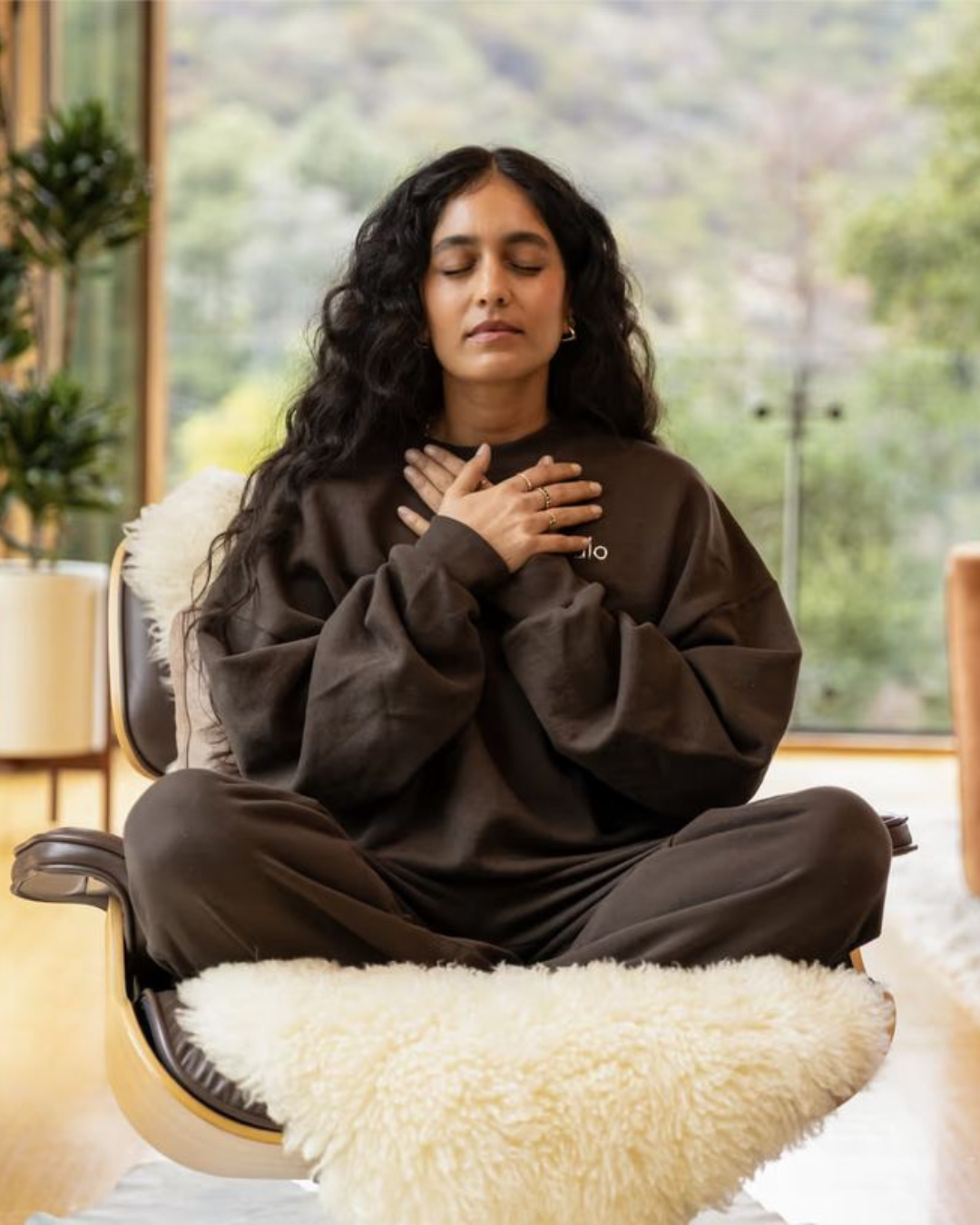
Instagram @radhidevlukia
Skeptics understandably want to know: Is this real, or is it just placebo?
According to clinical psychologists who have spent years studying the technique, the mechanism is surprisingly concrete. It's called memory reconsolidation, a process in which long-held beliefs and emotional patterns can actually be rewritten.
Here's how it works: When you recall a stressful memory or feeling, your brain briefly opens a window of neuroplasticity. For about four to five hours after that memory is activated, it's changeable. Tapping on specific acupressure points during that window sends calming signals to the amygdala, the brain's fear center, essentially interrupting the stress response.
The negative message gets disrupted, and the brain has an opportunity to file that memory away differently.
Think of it as hitting the reset button on a thought pattern that's been running on a loop for years. Those childhood beliefs, I'm not good enough, I'm not safe, something bad is going to happen, aren't as fixed as they feel. They're just well-worn neural pathways. Tapping helps pave a new route.
What the Research Shows

Pinterest @voguescandinavia
The studies backing this up are worth paying attention to. In one eight-week program, participants who tapped for food cravings found that those cravings didn't just temporarily subside, they stayed away for two full years after the program ended. Chronic pain patients in another study reported a 21 percent reduction in pain severity after just six weeks of tapping. Additional research has shown benefits for stress, burnout, and even symptoms of depression.
And unlike some wellness practices that feel like work, tapping appears to have an accumulative effect. A few minutes in the morning, repeated daily, builds what practitioners call a "stress buffer", the way a daily vitamin builds nutritional reserves. You might not notice it after day one, but after day thirty, something has certainly shifted.
How to Try It Yourself
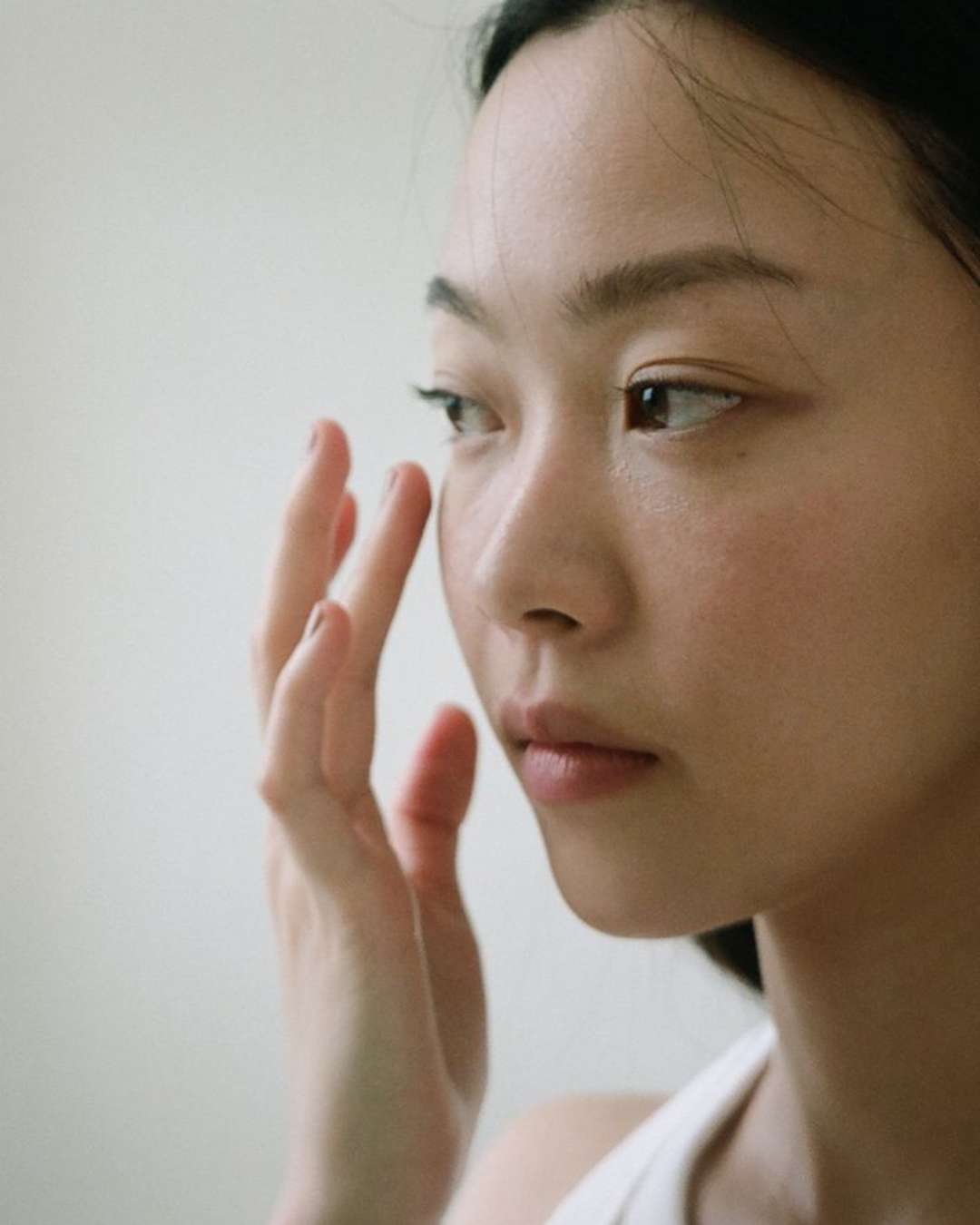
Pinterest @lesseofficial
The beauty of tapping is its simplicity. You don't need an app, a special space, or any equipment. Just your own two hands and a few minutes of privacy.
Start with the setup. Using two fingers, lightly tap the outer edge of one hand, the karate-chop point, while saying an affirmation three times. The classic formula sounds like this: "Even though I feel [anxious/stressed/overwhelmed], I accept that I feel this way." The goal is not to deny the feeling but to acknowledge it without judgment.
Then move through the points. Still tapping gently with two fingers, work your way through:
● The inner edge of the eyebrow
● The side of the eye (on the bone)
● Under the eye (on the bone)
● Under the nose
● On the chin
● Below the collarbone
● Under the arm (about level with the bra line)
● The top of the head
At each point, repeat a shortened reminder phrase, just the emotion, like "this anxiety" or "this stress." Spend a few seconds on each spot.
When you finish a round, pause. Take a breath. Check in with yourself. Has the intensity shifted, even slightly? If so, keep going. If not, try again with a different phrase.
Some people find that a quick session every morning is enough to keep negative energy from accumulating. Others prefer to tap on the spot when anxiety spikes during the day. For deeper work, old traumas, ingrained patterns, working with a trained practitioner in longer sessions can be a good option.
The Onion Effect

Pinterest @krislob1206
One thing practitioners warn about: Tapping can sometimes peel back layers you didn't expect. You might start tapping on anxiety and discover, halfway through, that what you're actually feeling is sadness. Or fear. Or grief that you've been carrying for years. When that happens, the instruction is simple: Start over. Tap the karate-chop point with a new setup statement that addresses what's actually there. "Even though I feel this sadness, I accept that I feel this way." Then move through the points again with the new feeling as your focus.
This isn't a sign that something went wrong. It's a sign that something real is moving.
The Strange Magic of It
There's no denying that tapping looks unusual. It's not the kind of thing you'd feel comfortable doing in a crowded office or on public transportation. But those who practice it consistently describe the effect in surprisingly similar terms: lighter, calmer, clearer.
The science says the brain has a window of several hours after tapping where it's unusually receptive to new ideas. That means the minutes following a session are prime time for planting different thoughts. What if this anxiety doesn't control me? What if I'm actually capable of more than I think? What if the story I've been telling myself isn't the only story available?