Meet MÜMÜ Matcha
Not all matcha is from Japan, meet the founder proving it.
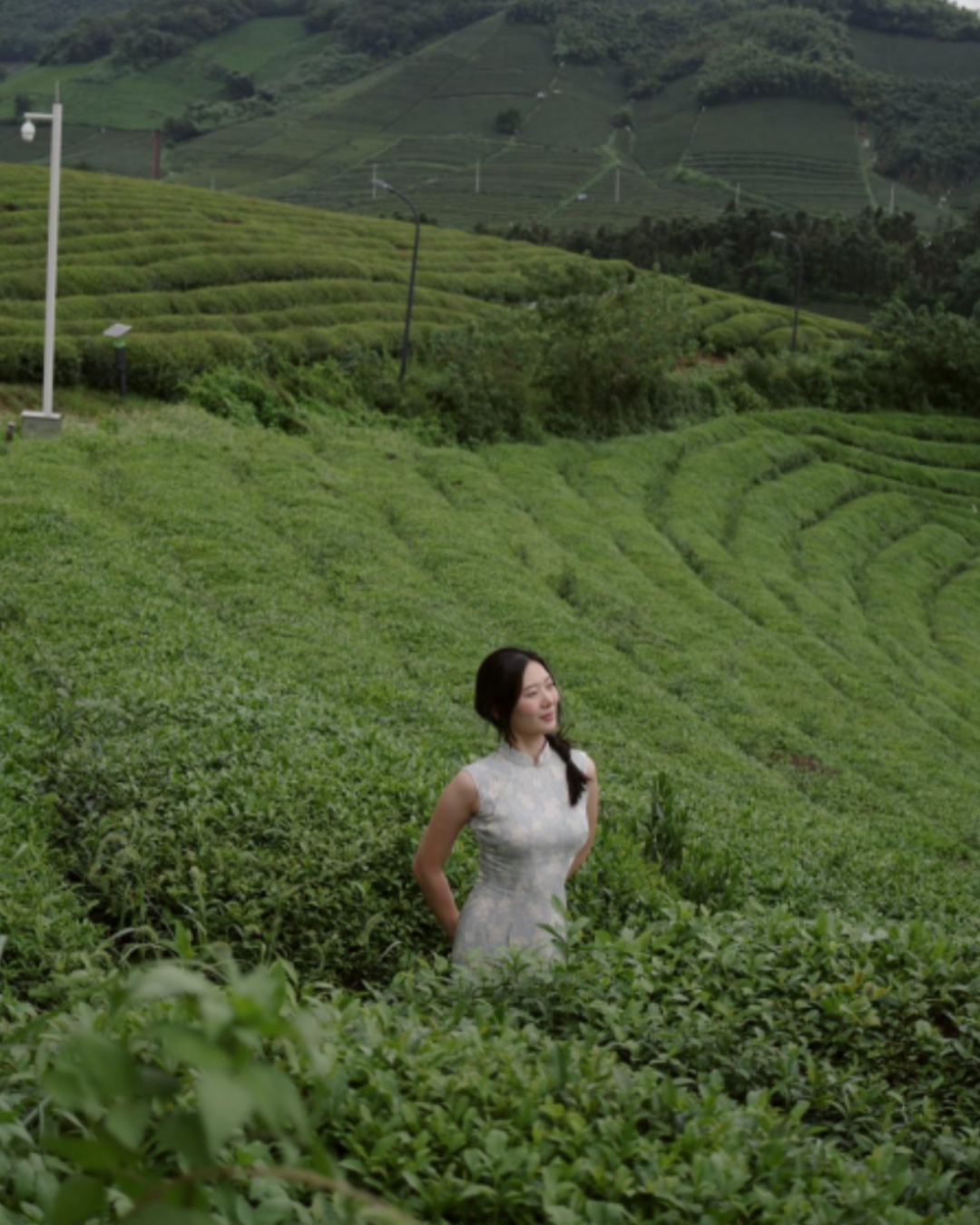
Instagram @mumu.matcha
Tea Roots: Tell us about your relationship with tea growing up, and how matcha became part of your daily ritual.
I was born and raised in Zhejiang, the heartland of Chinese green tea. Growing up surrounded by a rich tea tradition, tea became second nature to me. Later, while pursuing my master's degrees at Emlyon business school and Institut Lyfe in France, I deepened my knowledge in gastronomy and luxury hospitality.
Driven by my passion, I joined a professional tea association to systematically master the art of tea, from traditional ceremonies to the subtle nuances between cultivars.
For me, matcha was one of my private drinks and has always been a daily essential. When I first moved to France, I tried ordering a matcha latte at a Starbucks, only to be told they didn't carry matcha, only basic green tea. I think that moment planted a seed in my mind. I realized there was a gap between authentic matcha culture and everyday accessibility in Europe, and the dream of bringing true, good matcha into daily lives was born.
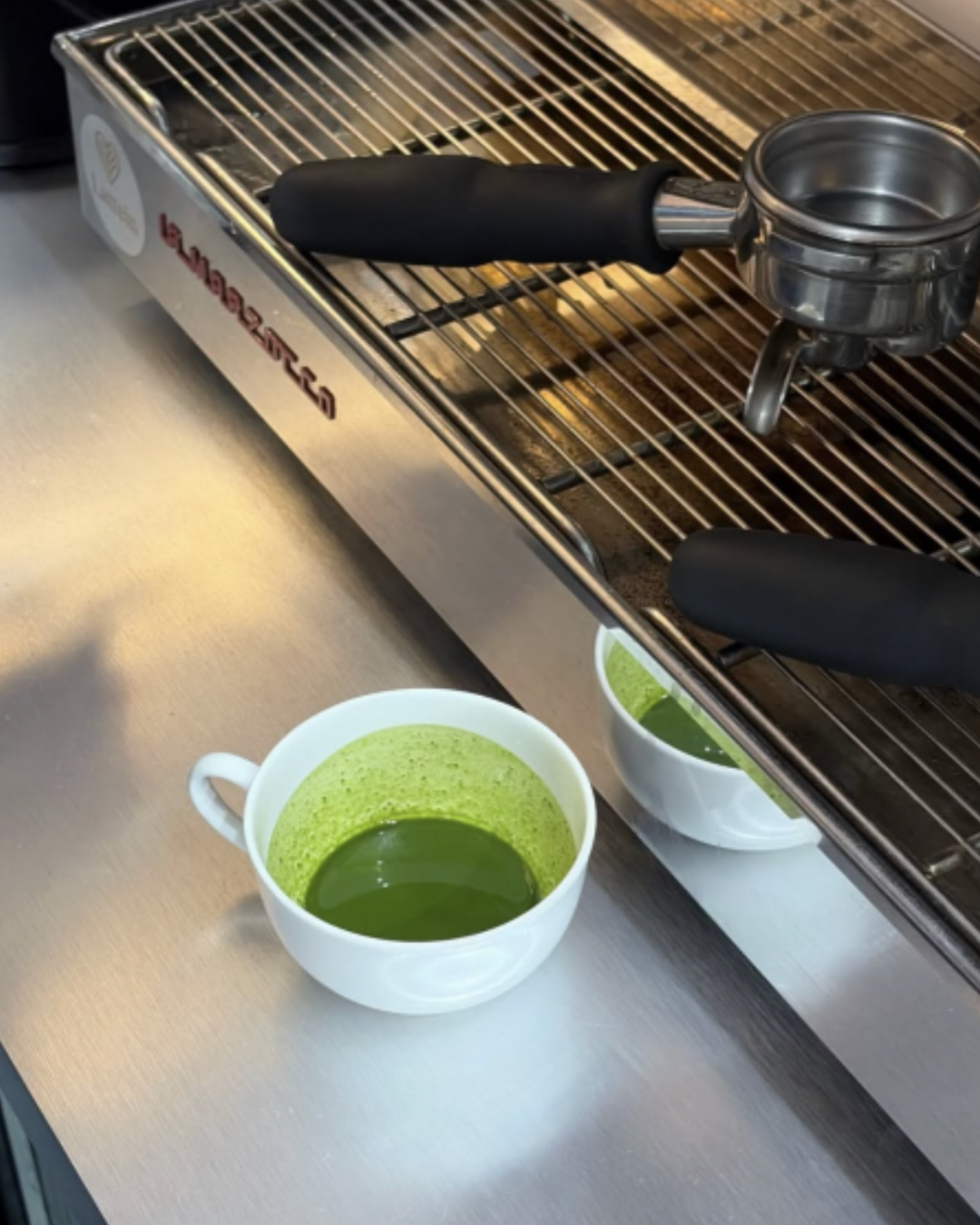
Instagram @mumu.matcha
The Beginning: How did you build the brand as a female founder from China and how has your background shaped it?
It started out of passion. When I first settled in Europe, I couldn't find the quality of matcha I was used to drinking daily. The initial spark was simple: I wanted real, authentic matcha for myself, and I believed others would appreciate it just as much if they had the chance to experience it.
But as I traveled back to China to visit tea farms, talk with local tea farmers, and spend time in processing factories, my perspective shifted. It became about so much more than just launching a product. I felt a profound sense of responsibility resting on my shoulders, a responsibility to honour my roots and heritage.
China's rich tea traditions are still somewhat enigmatic to many in Europe. As a female founder bridging these two worlds, my background allows me to decode that mystery with transparency and authenticity.
Being raised in Zhejiang's tea heartland and educated in France gives me a unique dual lens: I can preserve the ancient craftsmanship of my culture while translating it into a refined lifestyle that resonates with modern European consumers.
Chinese Matcha: When people think of quality matcha they think of Uji or Kyoto. How have people responded to yours being Chinese?
It’s true that Japan has built an incredible reputation for matcha. Initially, I had my own hesitations. But as I always believe, good flavor knows no borders. I conducted endless side-by-side blind tastings comparing premium samples from both Japan and China. When I discovered that Zhejiang produces matcha that easily matches the finest standards, sourcing from my home region became both a quality-driven choice and a proud tribute to my heritage.
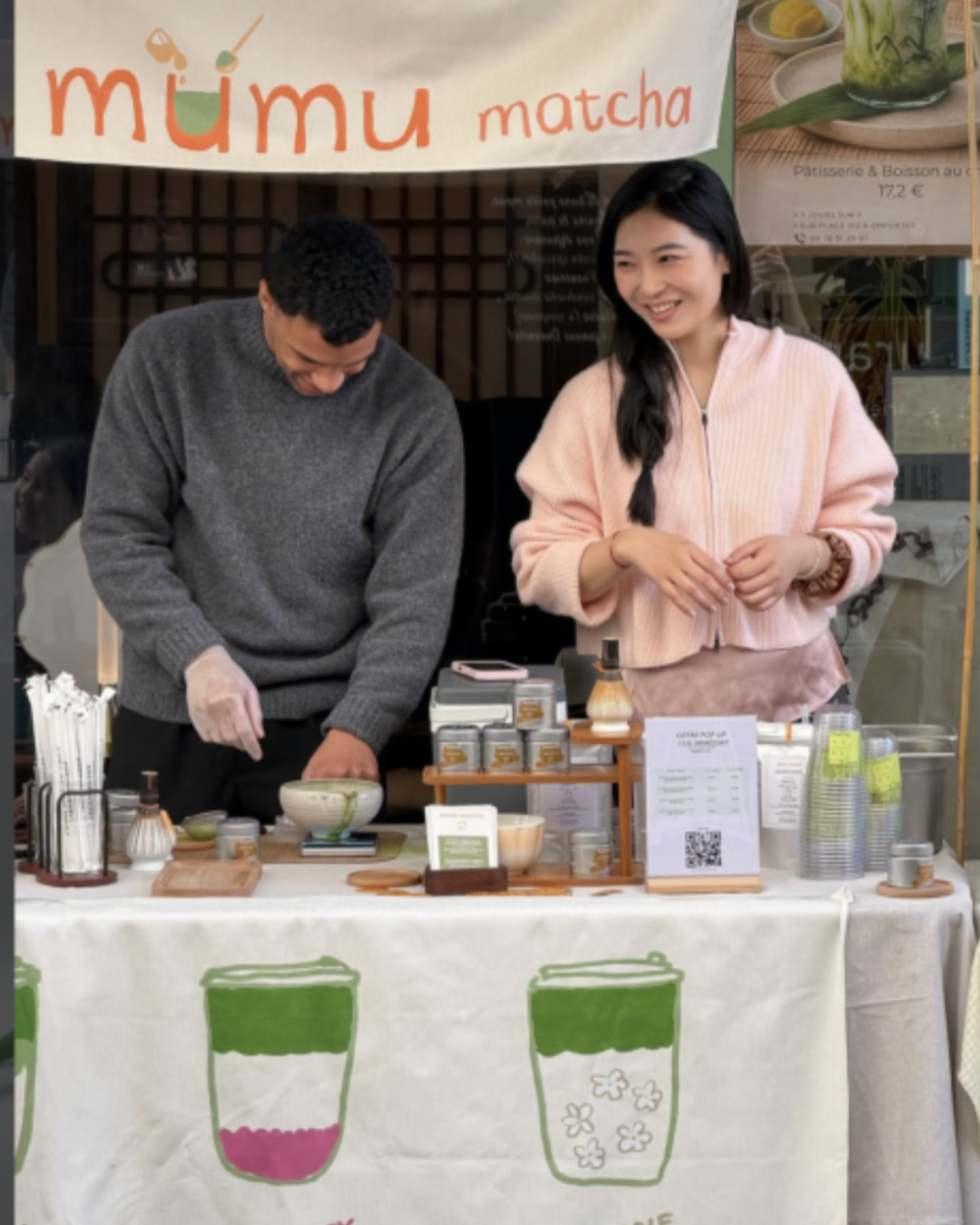
I believe taste is the ultimate proof. That’s why I host pop-ups across France to let people experience the matcha before prejudice takes over. I love sharing the history of matcha and my sourcing journey with customers. Many are surprised to learn about China’s deep matcha roots, but the product truly speaks for itself, and people are remarkably open-minded when introduced to something authentic.
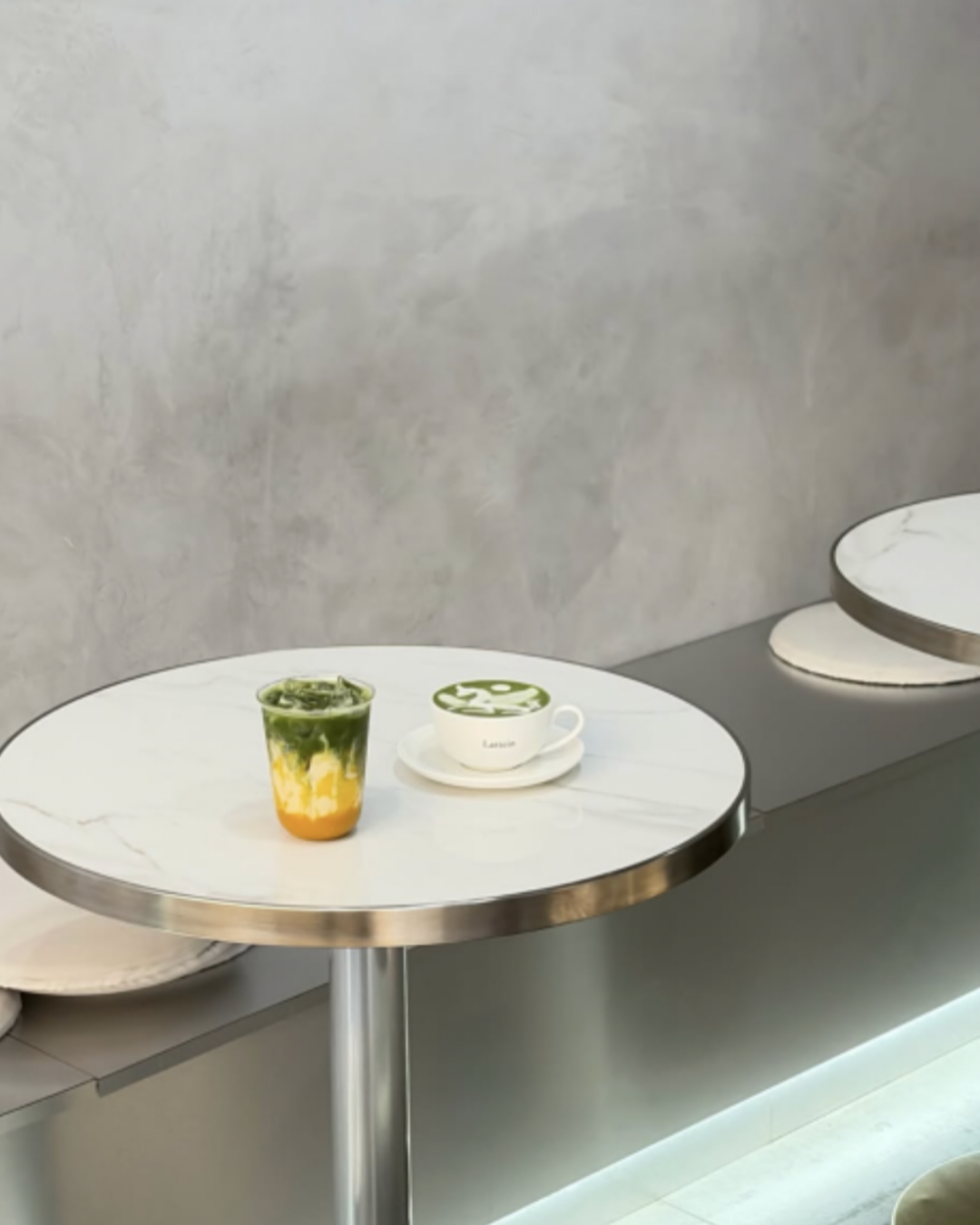
Instagram @mumu.matcha
Sourcing: How do you choose where your matcha comes from?
Sourcing is a hands-on, multi-step process for me. While several regions in China cultivate matcha, I systematically sample and evaluate batches from different producers to find the exact flavor profile I'm looking for.
Once a batch stands out, I visit the plantation in person. I audit everything: the shade-growing conditions, the processing equipment, and their laboratory testing protocols. I want to see the soil, meet the growers, and review the safety and purity data myself.
From Leaf to Powder: What makes matcha different from green tea?
When we drink green tea, we’re drinking an infusion. But with matcha, we consume the whole leaf. The process is uniquely detailed: 20 to 30 days before harvest, the tea plants are shaded to accumulate chlorophyll and L-theanine. After picking, the leaves are immediately steamed to stop oxidation, then de-stemmed and de-veined to leave only the purest heart of the leaf, known as tencha.
These key steps are what set matcha apart from standard green tea. Finally, the tencha is ground on stone mills into a micro-fine powder.
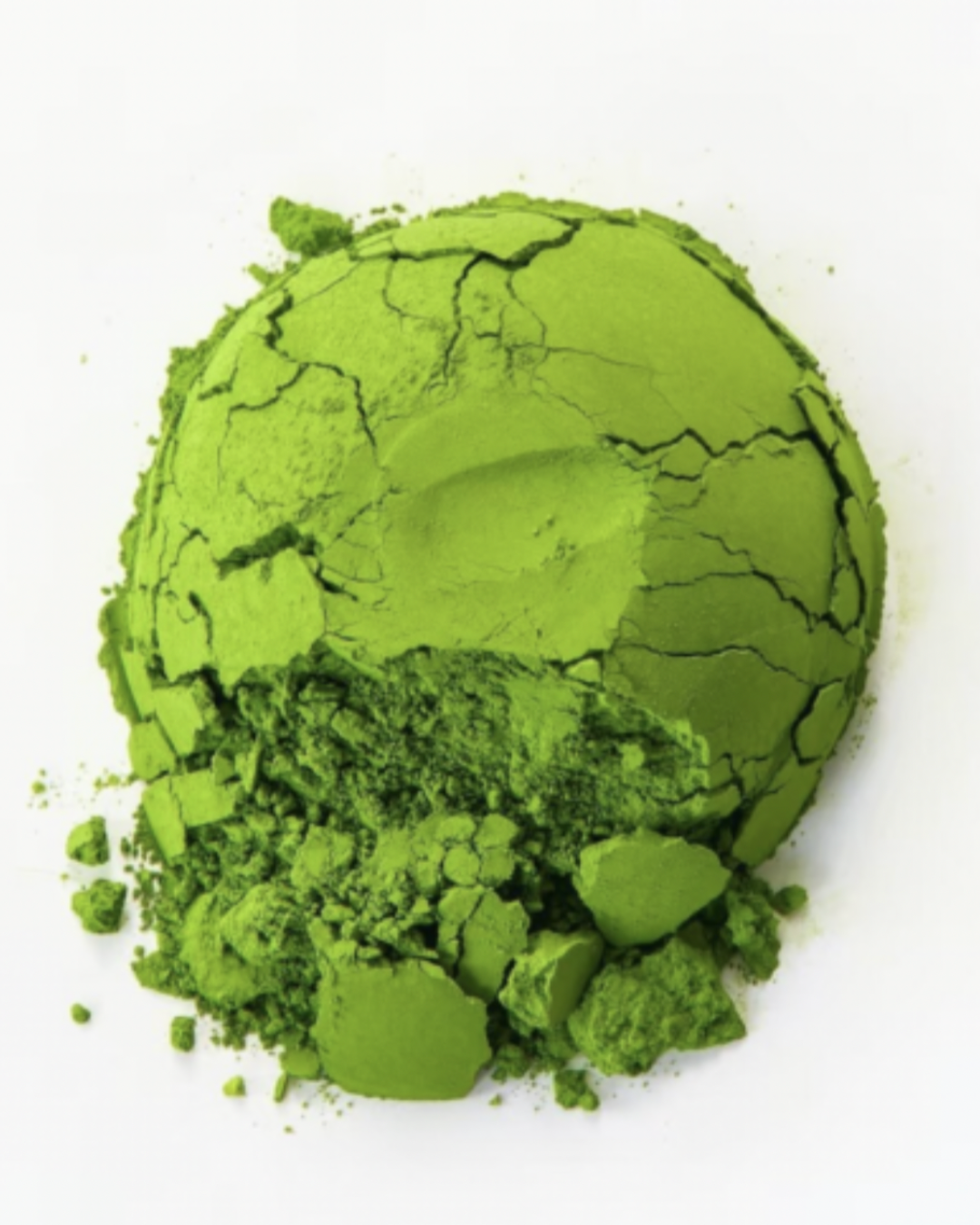
Instagram @mumu.matcha
Two Blends: Which cultivars do you work with?
Right now we offer two matcha for different occasions and flavor preferences. Our Ceremonial Grade Matcha is a single-cultivar made from Yabukita. It’s perfect for traditional preparation.
Our second offering is a specially crafted blend featuring Longjing 43 and Jiukeng (two esteemed Chinese green tea cultivars), bringing forward a rich, nutty and subtle chocolate flavour profile that shines through easily, making it perfect for daily lattes and creative drinks.
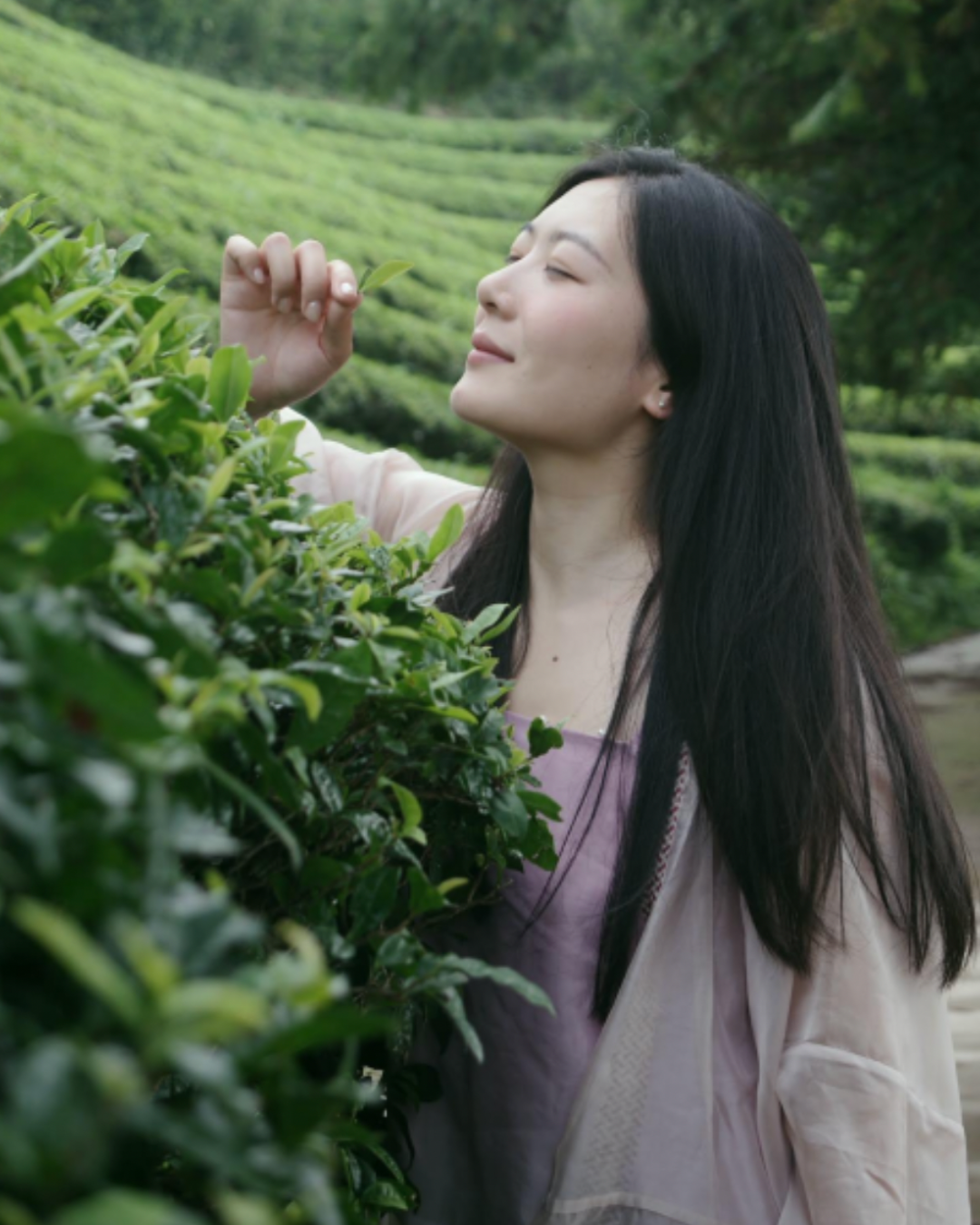
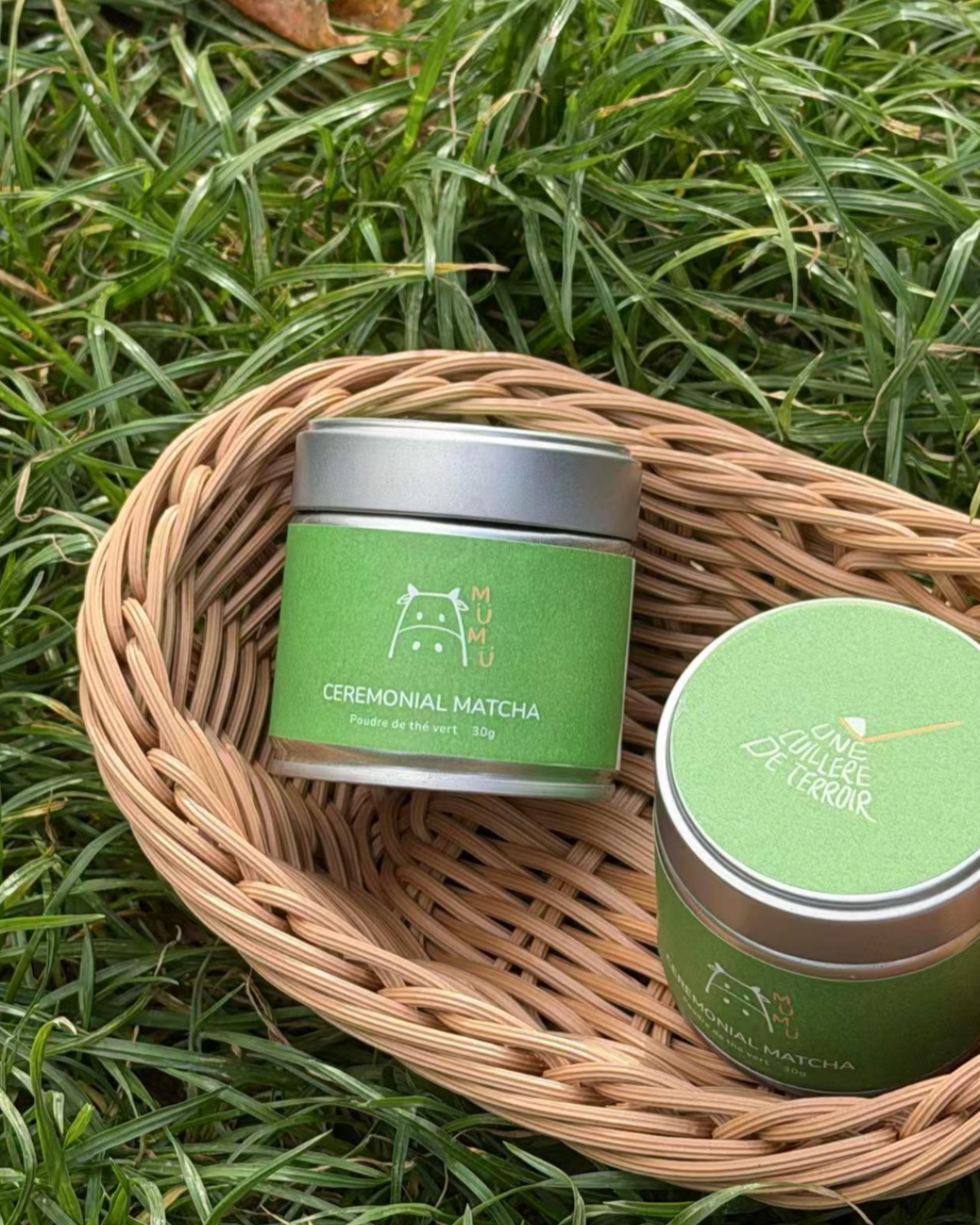
The ceremonial matcha is 100% green tea grown in Zhejiang, single-cultivar Yabukita, ground to an ultra-fine 1000 mesh powder and sold in 30g packs. Bella describes it as umami-rich with no bitterness, a seaweed fragrance and a fresh, mellow aftertaste.
Instagram @mumu.matcha
The Whisk: You use a different whisk. Tell us about it.
I personally use a black bamboo whisk. Black bamboo is naturally denser and far more durable than traditional white bamboo, making it much less fragile over time.
Because of its unique density and structure, it feels remarkably lightweight in your hand and whips up a rich, velvety mousse effortlessly. When you prepare matcha every single day like I do, having a lightweight, durable tool makes the entire ritual that much more seamless and enjoyable.
Instagram @mumu.matcha
The Menu: How do you create your recipes?
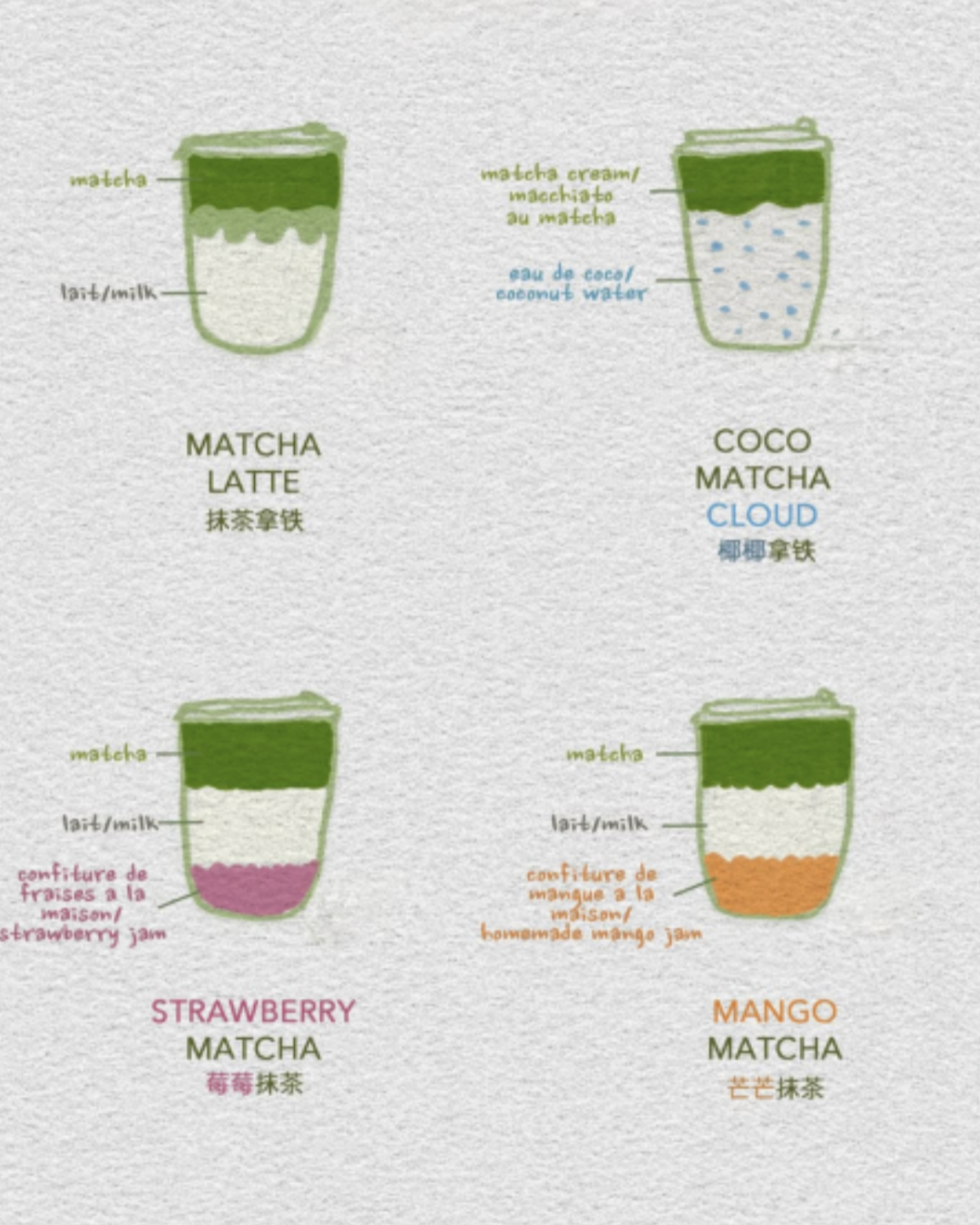
Because I did several pop-ups, at first I made the drinks people accept most easily, the popular ones you see on the internet. Even people who have never had matcha can say yes to those. Slowly I started making special recipes. Since I make matcha every day, inspiration sometimes just comes naturally. I also get ideas from seasonal ingredients, like our chestnut matcha for autumn.
I test it myself first to find the right ratio, then I let my friends try it. If they all say it's good, then it goes on the menu.
Instagram @mumu.matcha
Growing the Brand: How has the brand grown so far?
I officially launched last November, right after I wrapped up sourcing in August. At first, I focused mostly on social media, but I quickly realised a big challenge: people could see our matcha online, but they couldn't actually taste it.
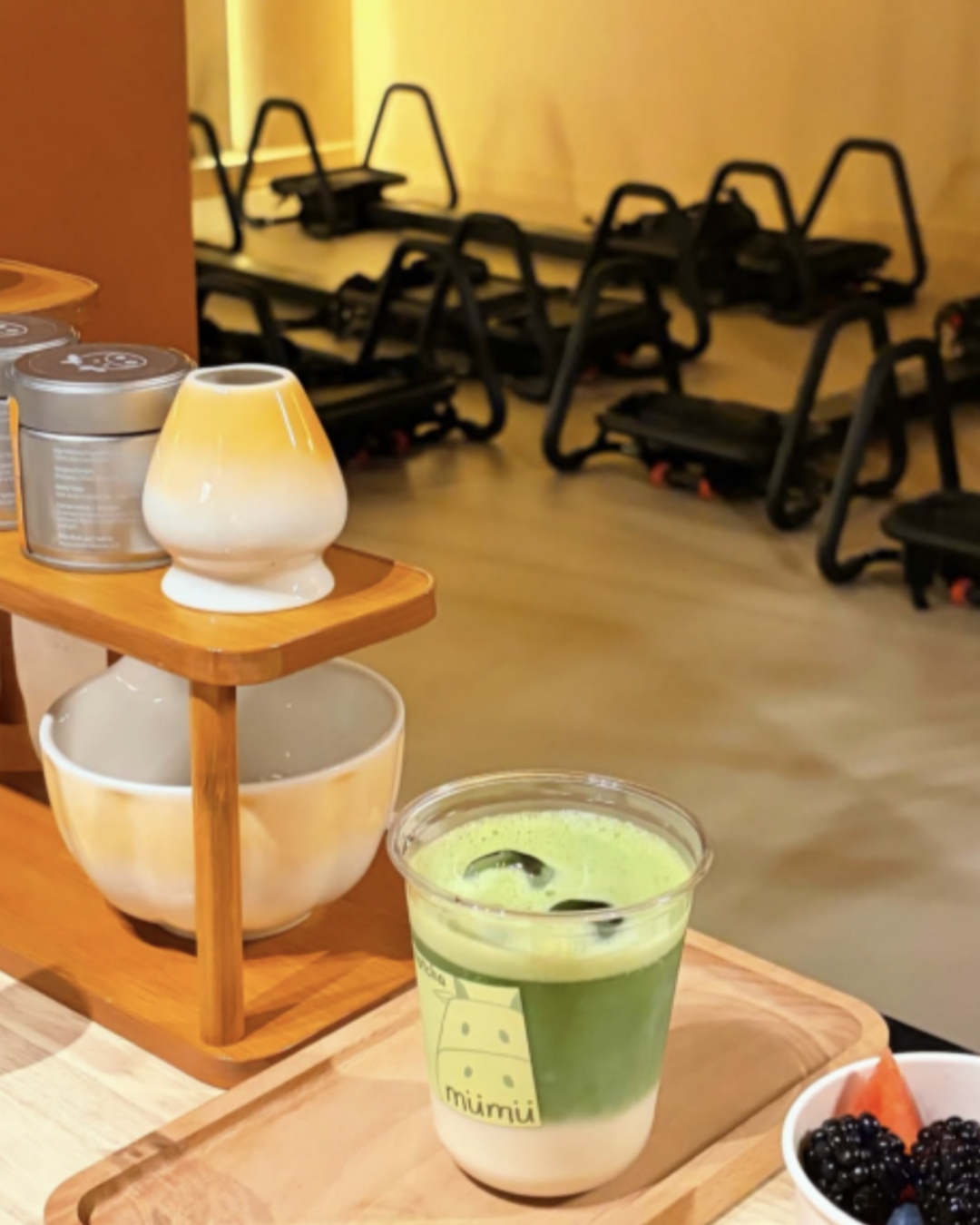
So, I took the initiative and started reaching out to cafés in France for B2B collaborations. Once they tasted the quality, many loved it and started using our matcha. On top of that, hosting pop-ups has been huge for us - it gives people a real, face-to-face chance to experience MÜMÜ in person.
Instagram @mumu.matcha
The Market: Matcha is a crowded space right now. Did it feel hard to start?
To be honest, when I first started, I wasn't overthinking it, I just really wanted to do it. I was super confident in the quality of my tea and wanted to bring it to Europe. But then I realized just how crowded the market actually is. Every day I see a new brand popping up, and even big tea companies are pushing matcha now.
But I think the ones who do it with passion are the ones who survive, and that's why I've insisted until now. I also get so much grounded energy from our tea farmers. Some of them have been tending their fields for 10, 15, or even 20 years. While matcha trends come and go so fast on social media, they just quietly focus on growing amazing tea. I see myself as the bridge between these two worlds, bringing their lifelong expertise and dedication straight to my customers.
Instagram @mumu.matcha
The Design: Did you design the brand yourself?
At the beginning, I handled literally everything myself including the very first package design. But after gathering feedback from our early customers, I felt it needed a more artistic and refined touch. So, I reached out to a close friend of mine who studied design at Harvard University.
We talked almost every day. I shared stories about my sourcing trips in China, my conversations with the tea farmers, and the serene beauty of the tea fields. She drew her inspiration right from those stories, translating those real moments and feelings into the amazing packaging design we have today.
The Future: When you imagine the biggest version of this brand, what do you see?
When I look into the future, my dream is to bring China's rich, thousands-year-old tea culture and its exceptional tea quality to a global audience.
I don't want to just follow a quick trend. I want to build a lasting, long-term brand rooted in authenticity, transparency, and true craftsmanship, something that genuinely enriches people's daily lives for years to come.
Instagram @mumu.matcha
Where to find Bella Zhou
The matcha is available at mumumatcha.eu, with worldwide shipping, and in person in Paris at partner cafés and tea rooms, including Lattein Coffee, Le Catfé and Serenithe Paris.
Stay tuned for upcoming pop-ups by following her on Instagram and TikTok.