Fashion is Art
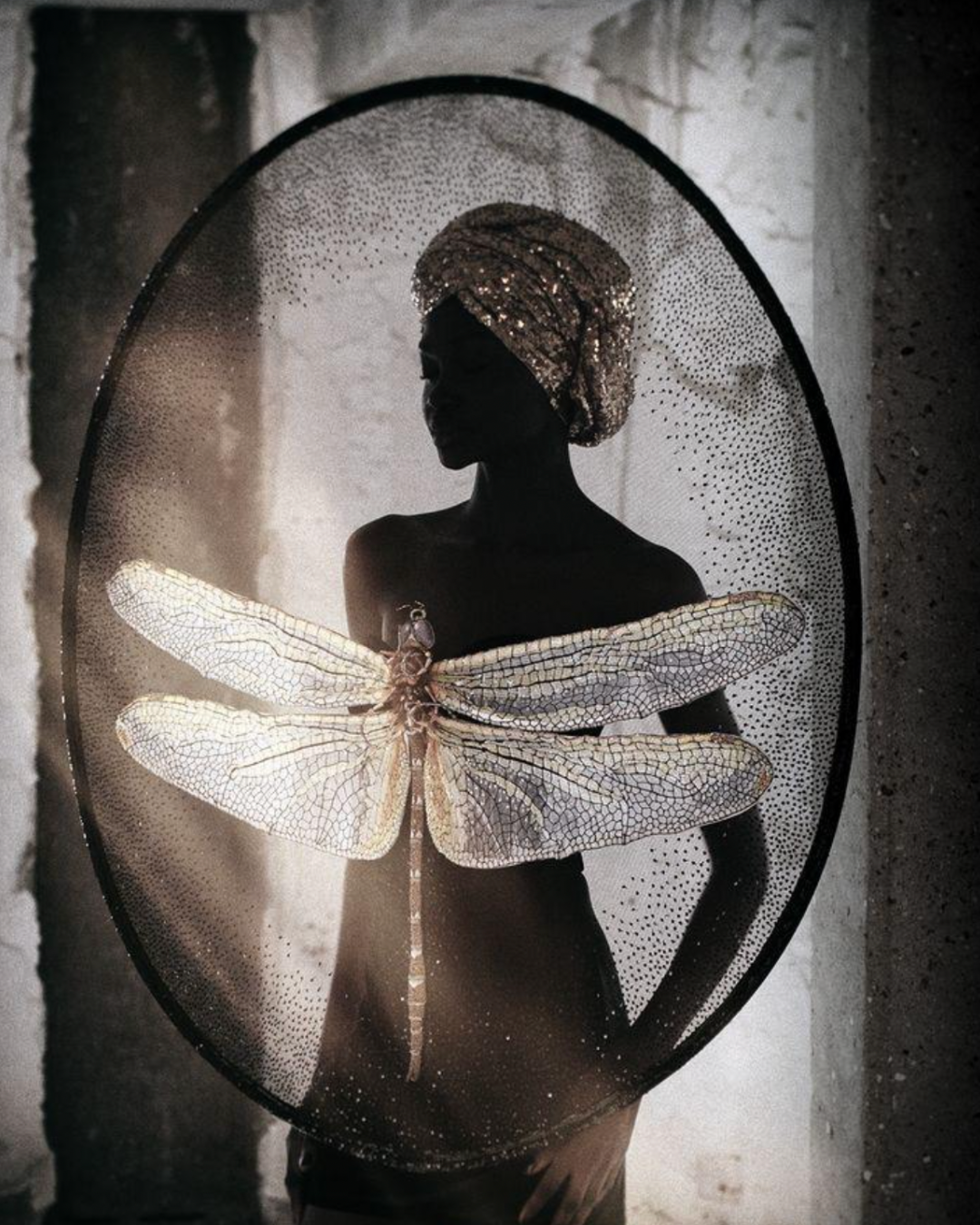
Rahul Mishra Spring Couture 2024
Life imitates art. It borrows its colours, its drama, its symbolism, sometimes even its exaggeration. And nowhere does that relationship feel more visible than on the famous steps of the Metropolitan Museum of Art during the Met Gala. For one night, the red carpet stops being just an entrance to a museum; it almost becomes part of the museum itself. The people walking up those steps aren’t simply dressed for an event, they arrive almost like exhibits, each look carefully constructed, almost curated, like a moving piece of art.
This year’s theme, “Costume Art”, with the dress code “Fashion is Art”, really pushes that idea further. It suggests that fashion shouldn’t just reference art, it is art. In the same way painters work with colour and sculptors work with marble or bronze, designers work with fabric, structure and craftsmanship. A gown becomes more than something to wear. It becomes composition, silhouette and texture, something that carries meaning and visual impact in much the same way a painting or sculpture does.
Under this idea, the Met Gala carpet turns into something closer to a gallery. Except instead of artworks hanging on walls, they walk, move and interact with the space around them.
The Body as Canvas
At the centre of fashion lies the body, and under the idea that “Fashion Is Art”, the body becomes the canvas. Designers shape garments around anatomy in much the same way sculptors work around form, through corsetry, draping and structure. The result is clothing that doesn’t simply dress the body but transforms it into part of the artwork itself.
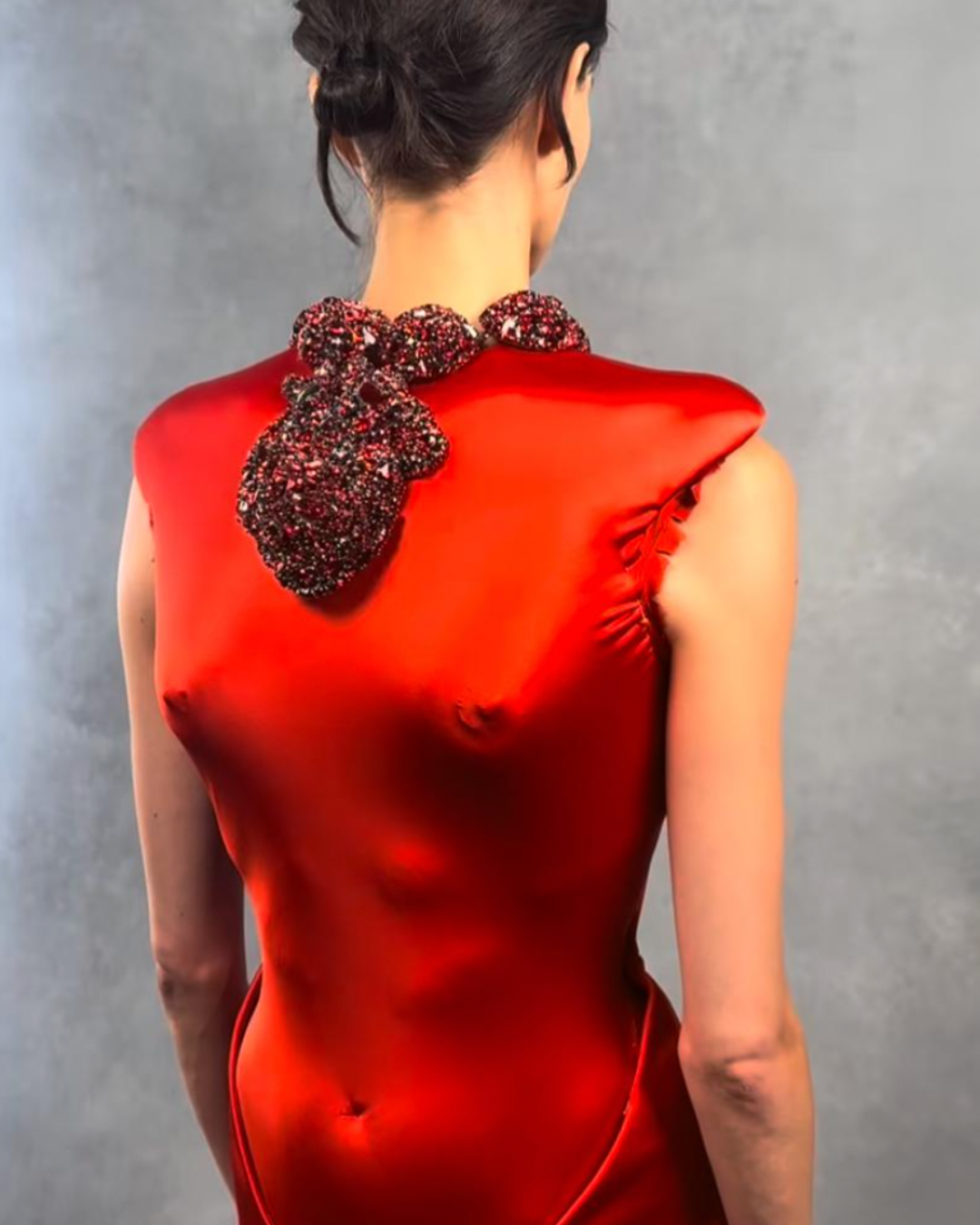
Schiaparelli’s Beating Heart necklace from FW25
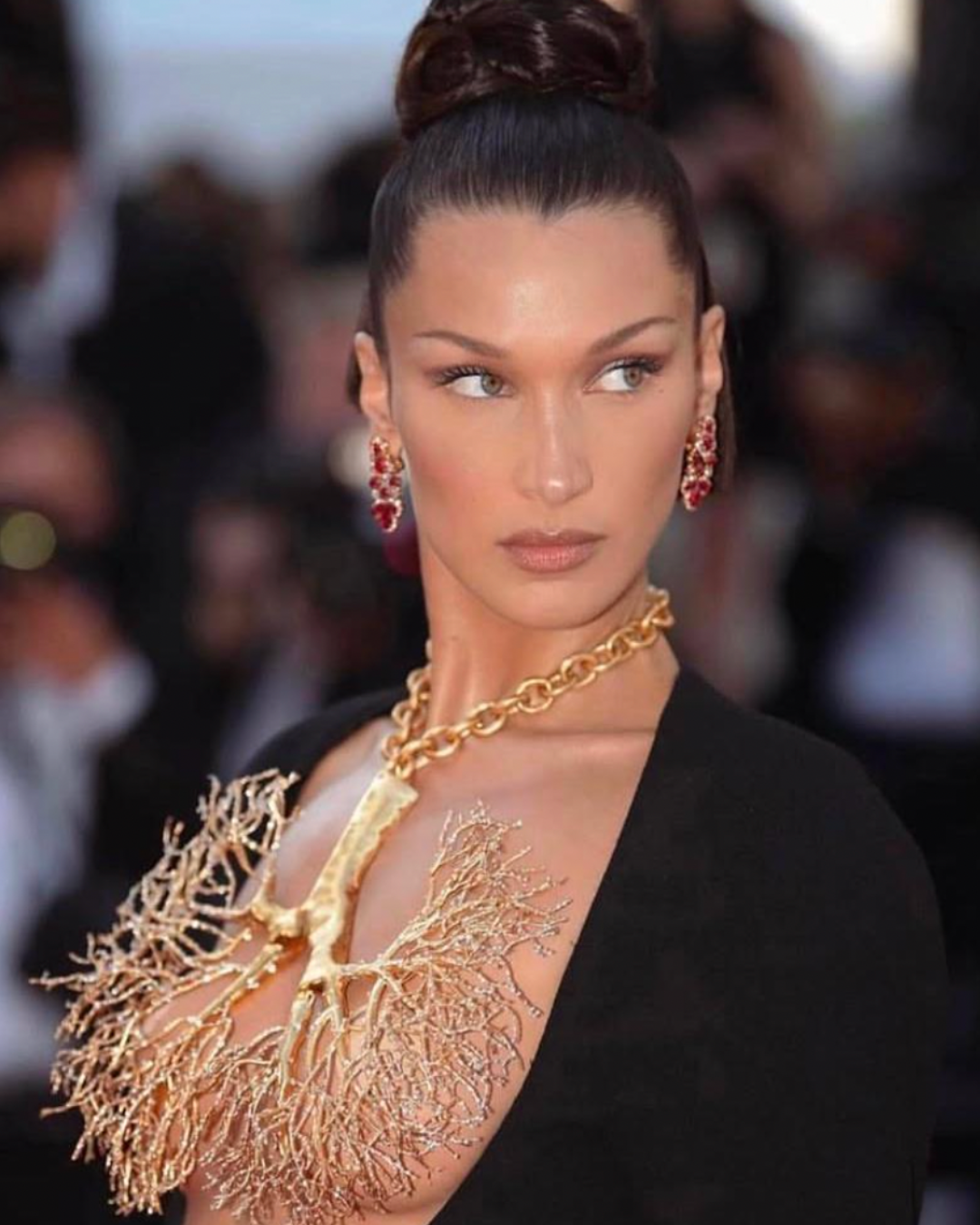
Bella Hadid in Schiaparelli at Cannes Film Festival 2021
Fashion history offers several examples of this approach. The surrealist couture of Schiaparelli often turns anatomy into sculpture, from the house’s striking beating heart dress to the dramatic gold lung necklace from its Fall 2021 couture collection worn by Bella Hadid at the 2021 Cannes Film Festival.
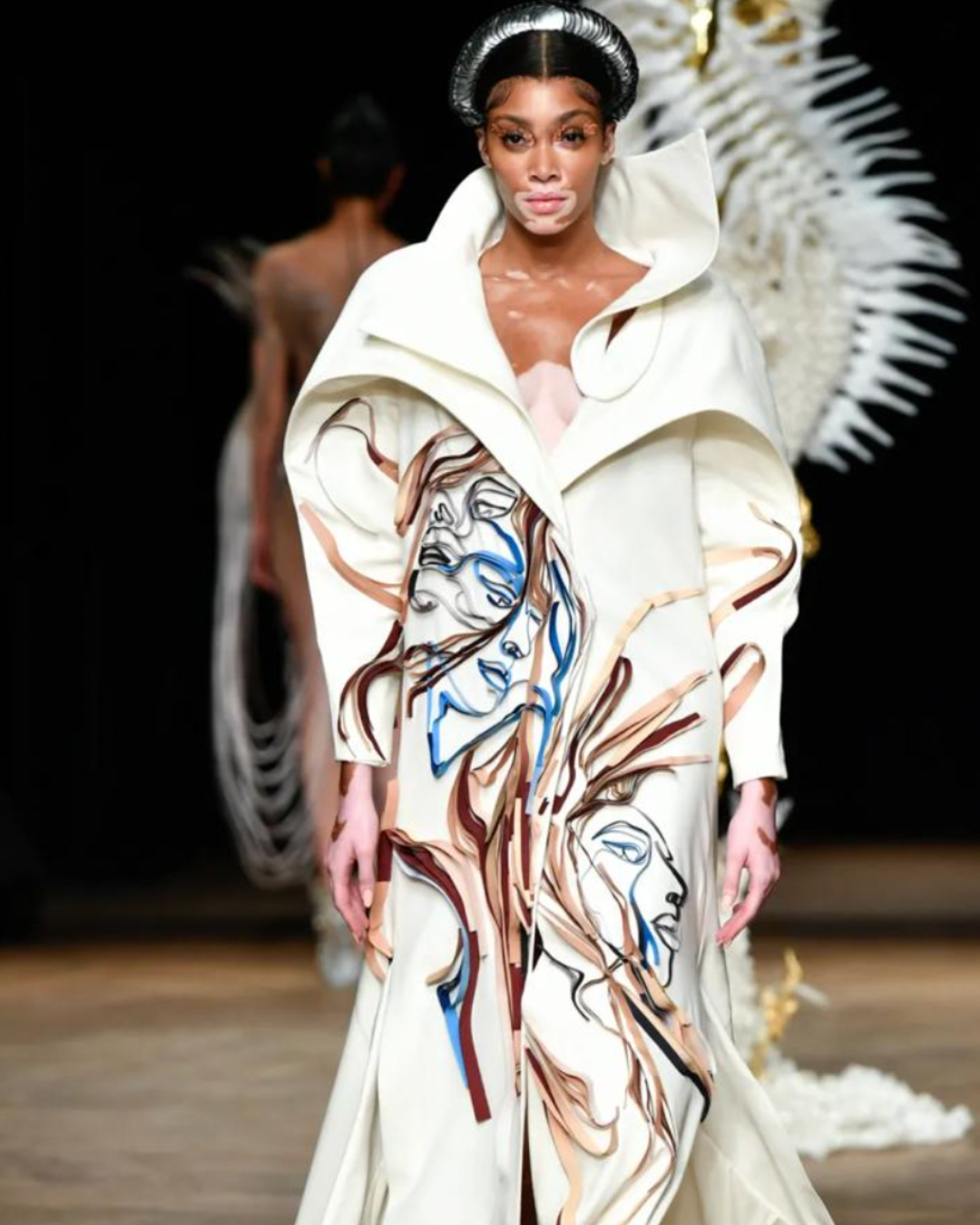
Iris van Herpen’s Fall 2022 Couture
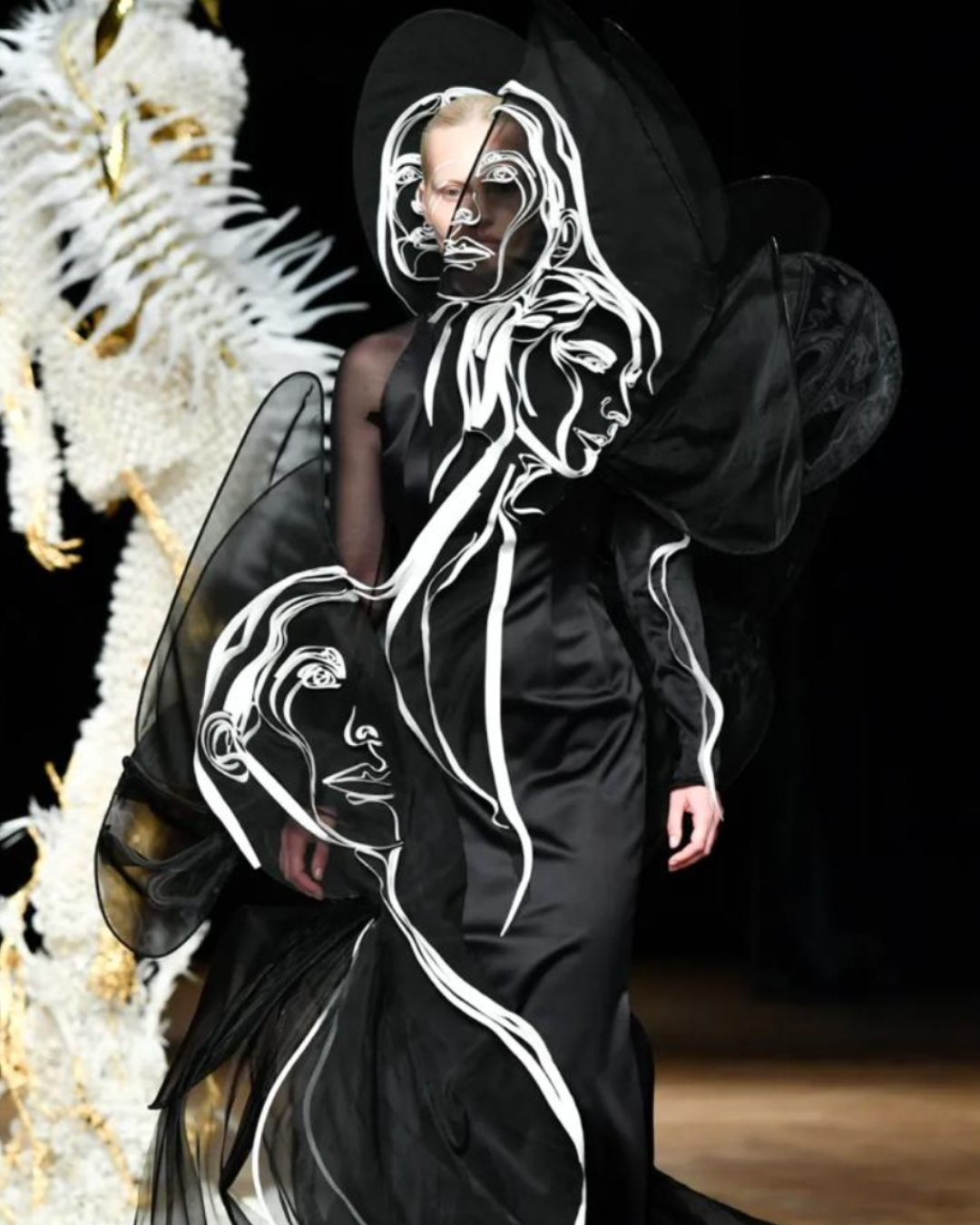
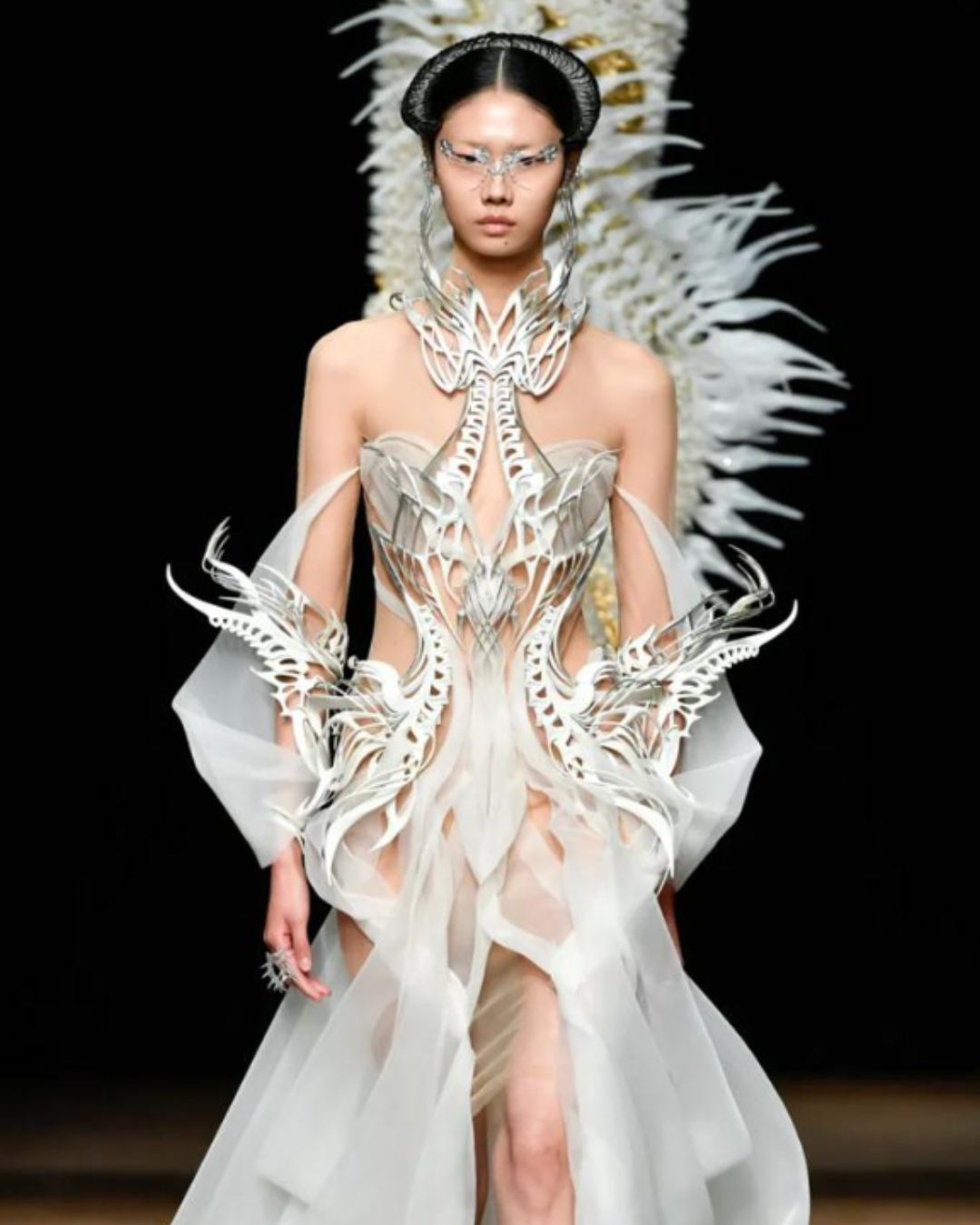
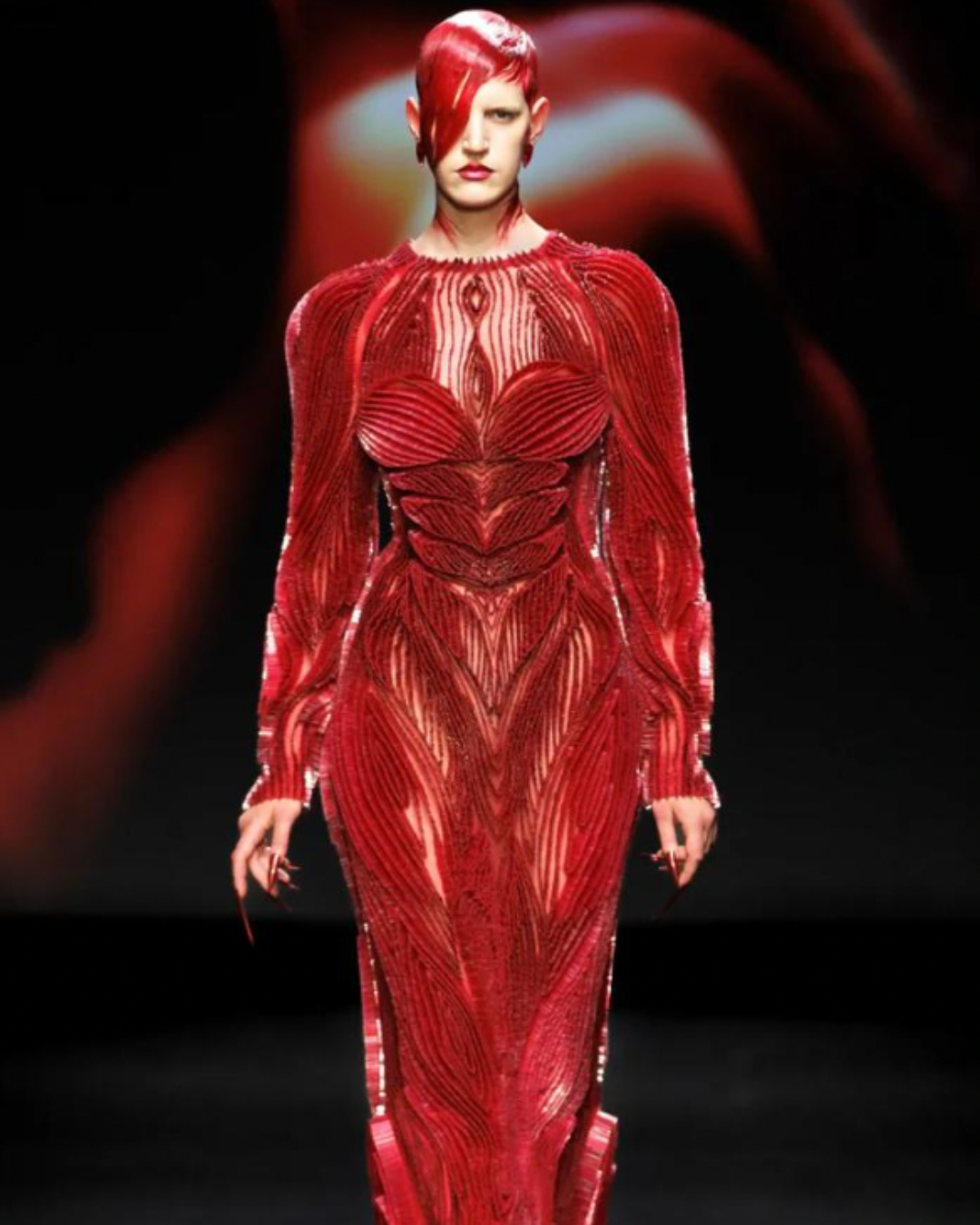
Robert Wun’s AW24 Couture
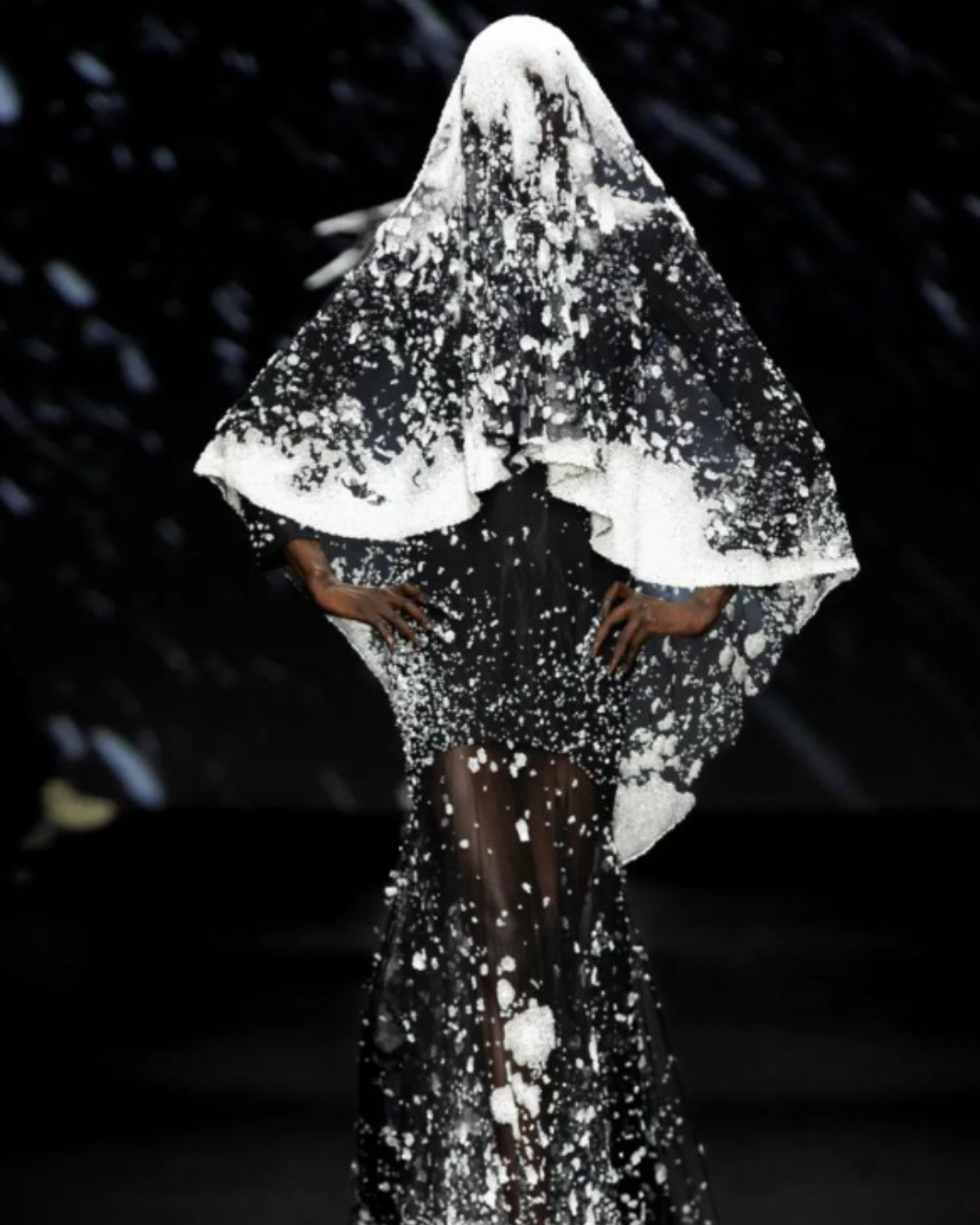
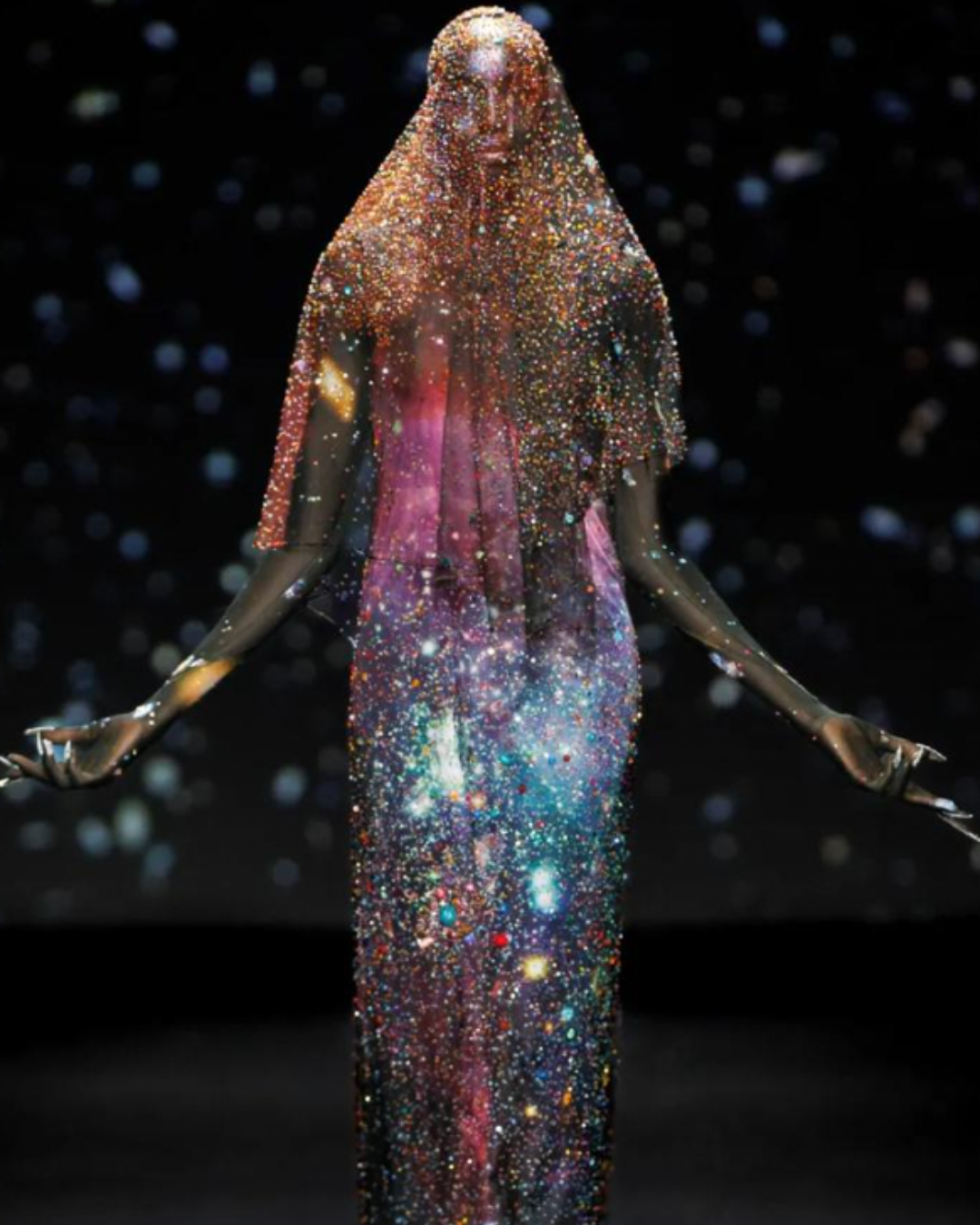
Other designers explore the idea through movement and structure. The futuristic silhouettes of Iris van Herpen’s Autumn/Winter 2022 couture resemble kinetic sculptures, garments that appear to ripple and hover around the body like living installations. Similarly, Robert Wun’s Autumn/Winter 2024 couture transforms garments into theatrical works of art, using dramatic colour, sculptural shapes and painterly surfaces that feel almost like abstract canvases worn on the body.
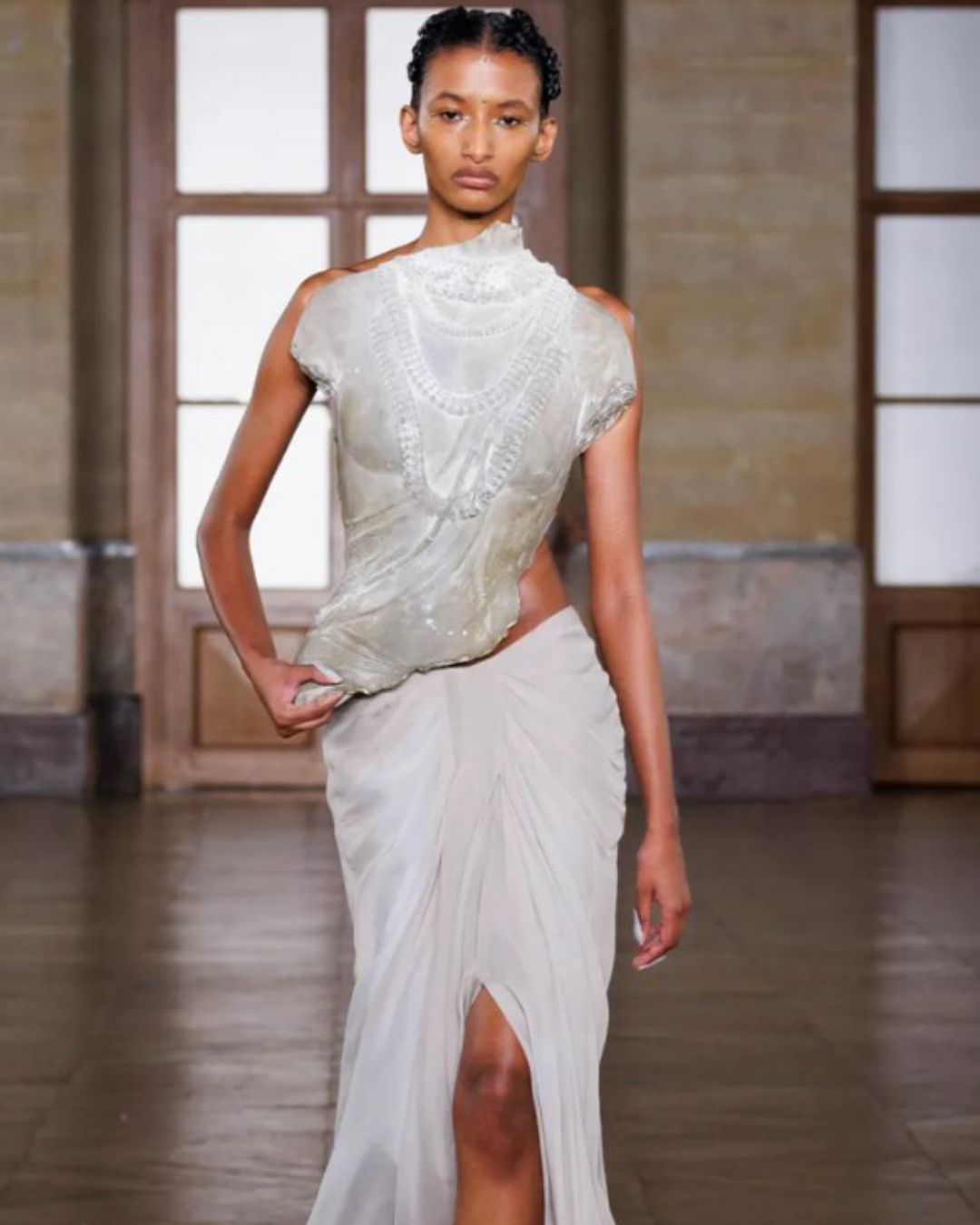
Gaurav Gupta Spring 2026 Couture
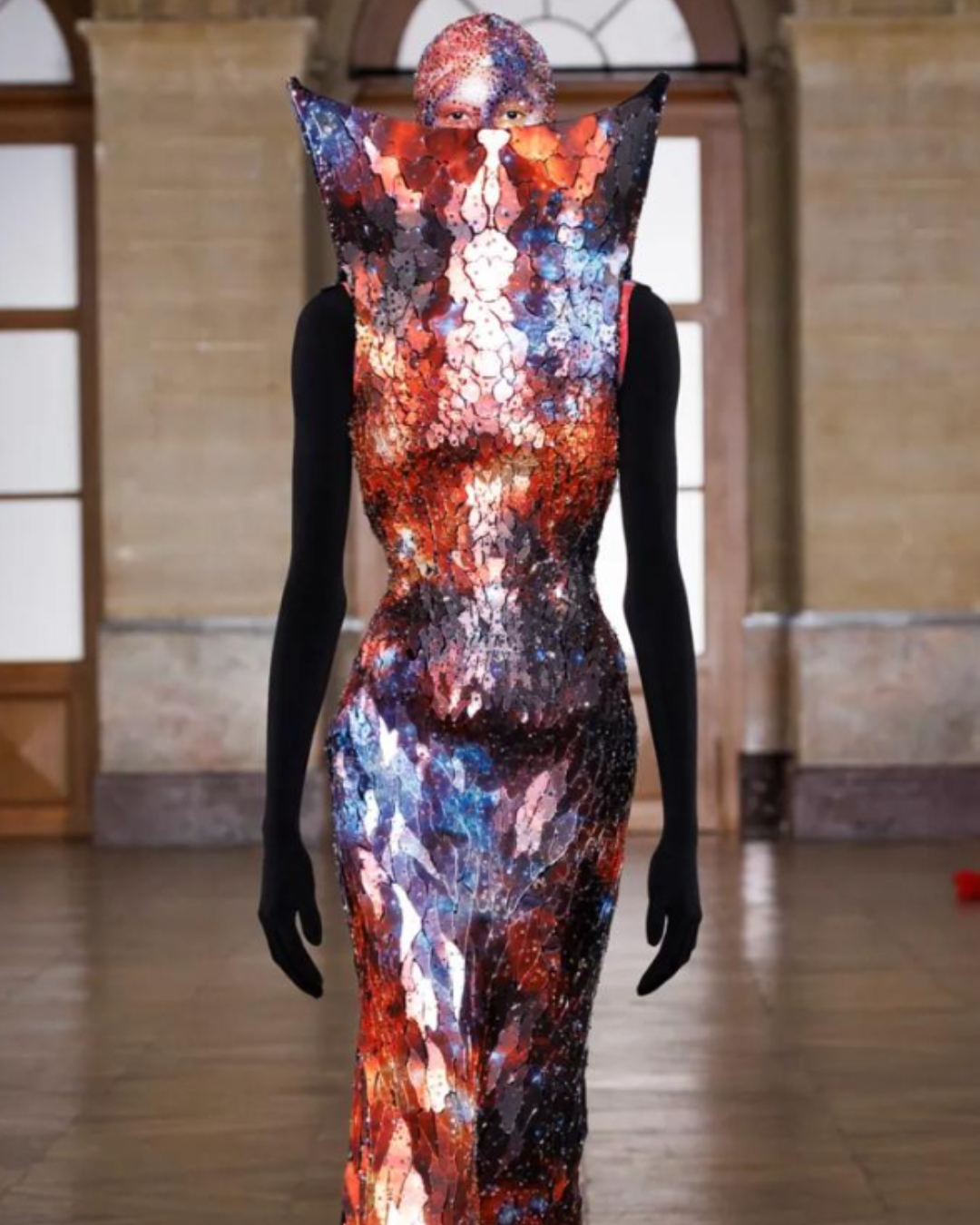
Designers such as Gaurav Gupta approach the idea through fluid, sculptural draping, where fabric twists and spirals around the body like liquid architecture, turning the silhouette itself into a form of sculpture.
Painting Translated Into Fabric
Painting may become one of the most literal interpretations of the theme. Designers might draw directly from the language of art history, translating colour palettes, brushstrokes and composition into textiles.
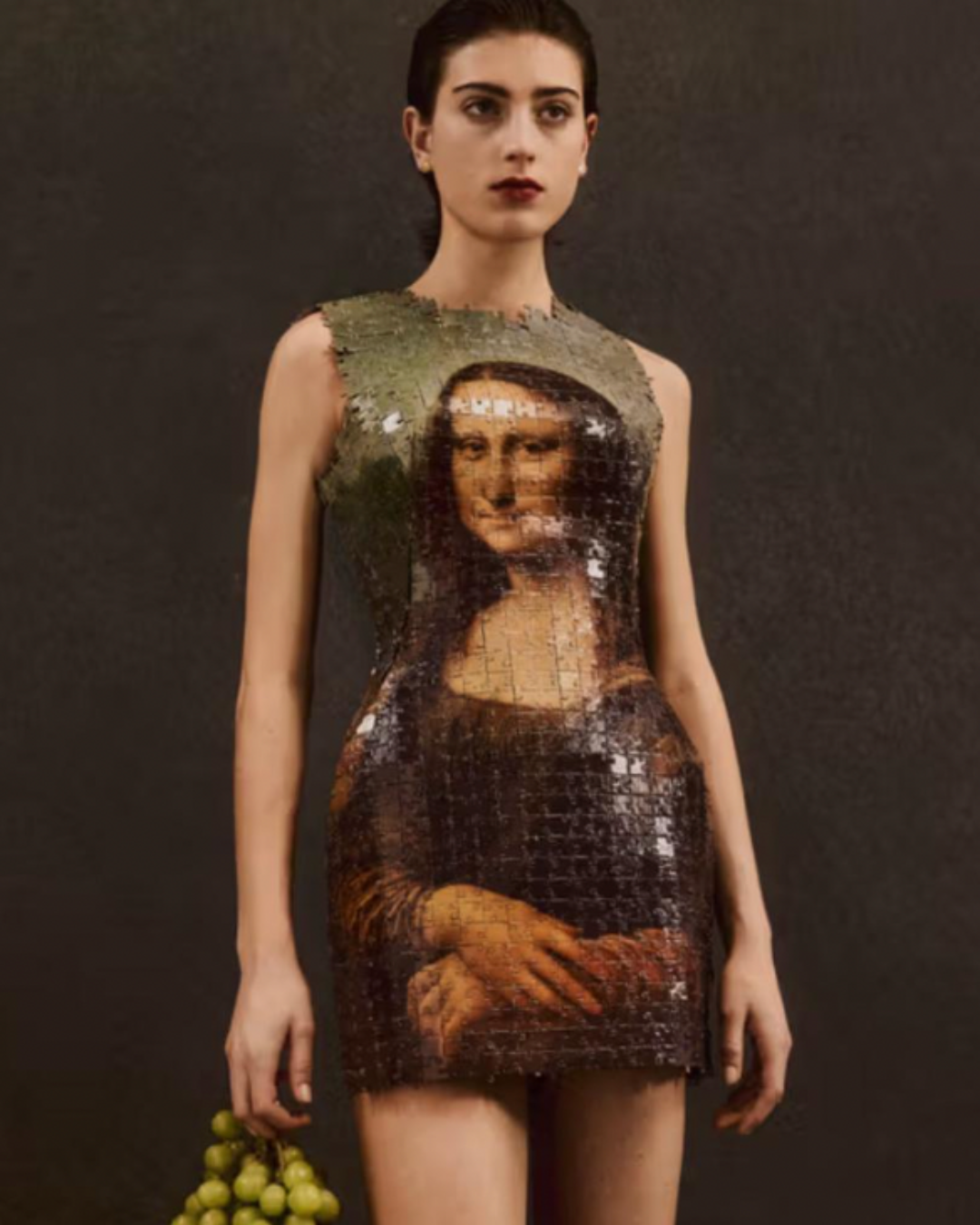
Marine Serre’s La Joconde Dress
A striking example is Marine Serre’s La Joconde dress, created using puzzle fragments of the Mona Lisa portrait and reconstructed across the body like a mosaic. The artwork appears to move with the wearer, almost as if the painting has stepped off the walls of the Louvre Museum and into motion.
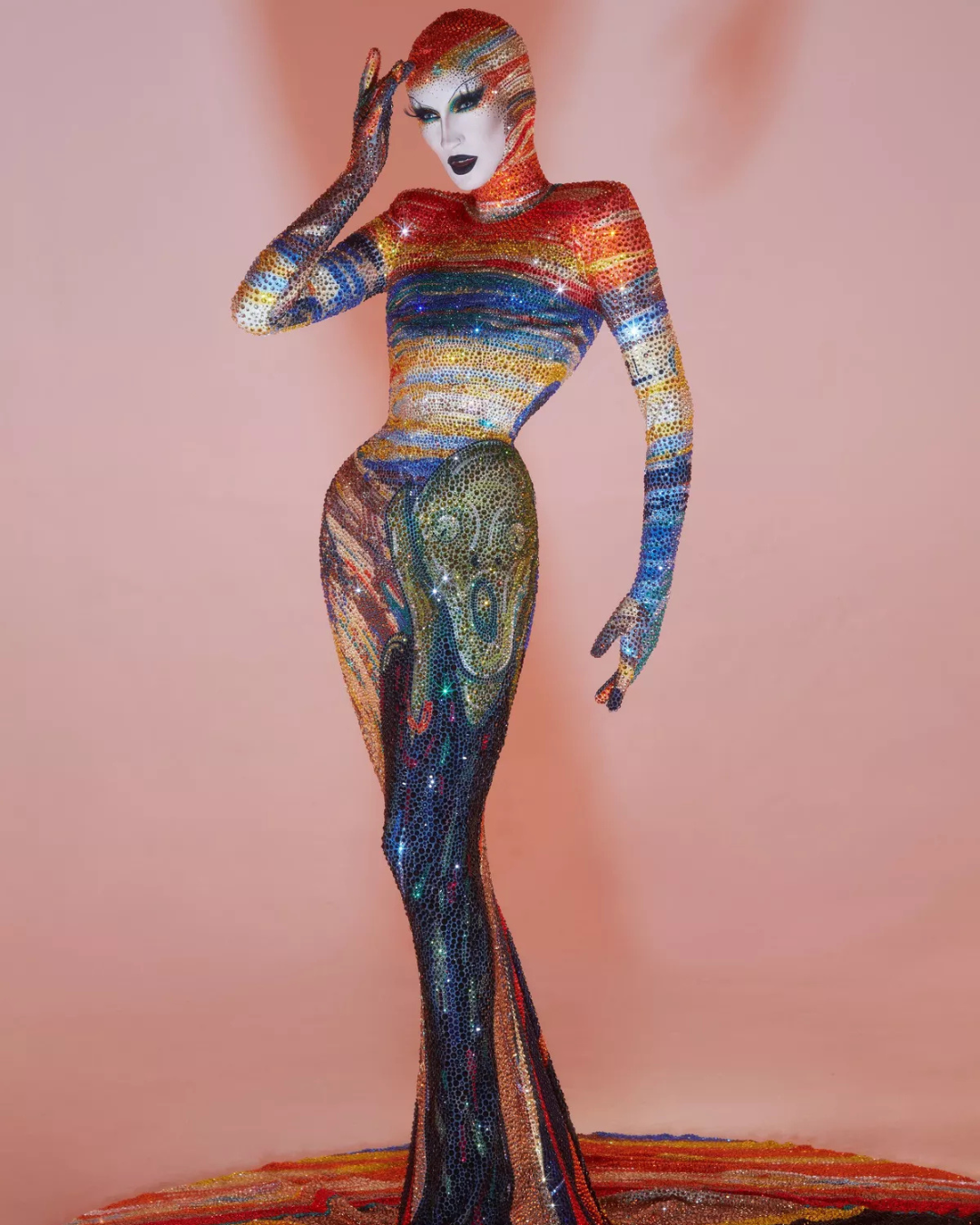
Drag Queen Gottmik wearing Scream dress by Vincent Braccia better known as Disco Daddy
Moments like the dramatic “Scream dress” worn by Gottmik, inspired by Edvard Munch’s The Scream, show how a painting can transform into costume, narrative and spectacle all at once.
Sculptural Couture
Fashion is perhaps closest to sculpture among the traditional art forms. Unlike painting, which exists on a flat surface, couture works in three dimensions. Designers shape silhouettes that extend beyond the body, altering its form and interacting with the space around it.
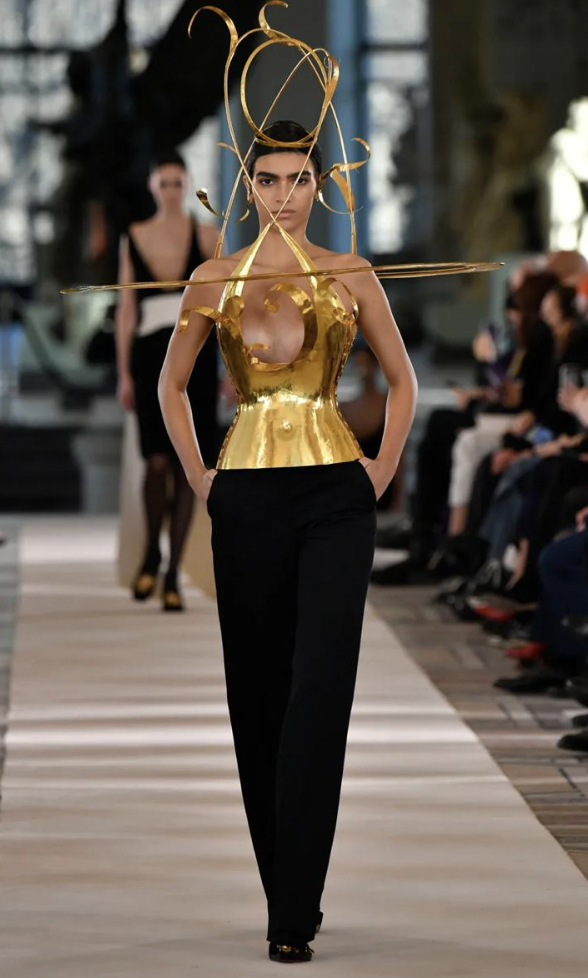
Schiaparelli Spring Couture 2022
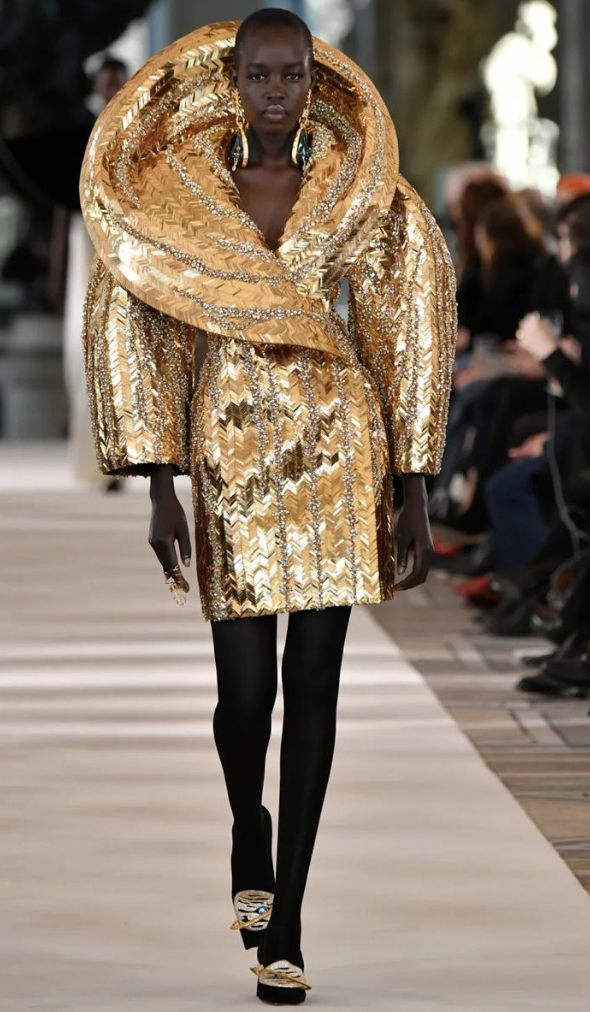
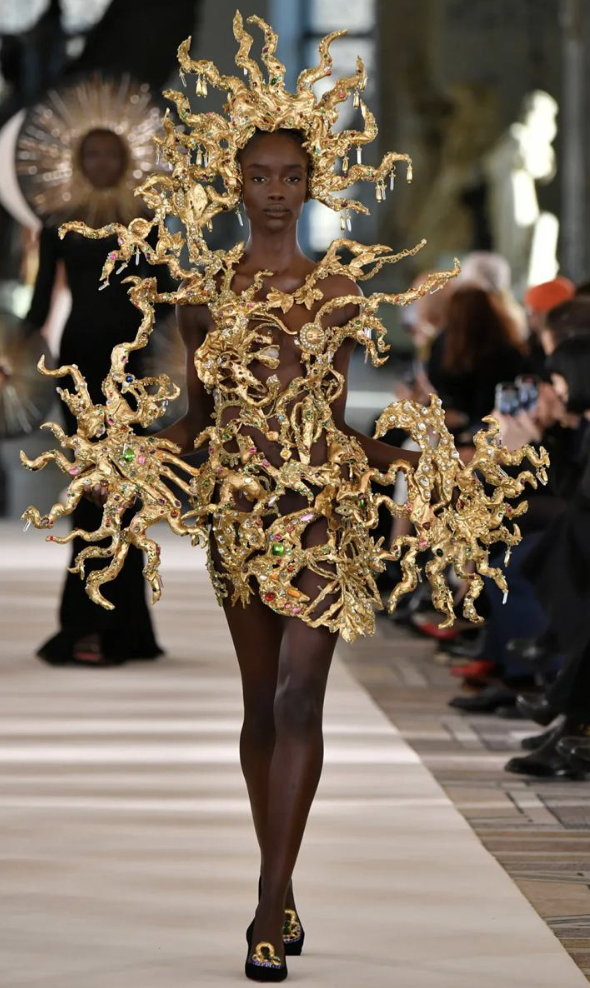
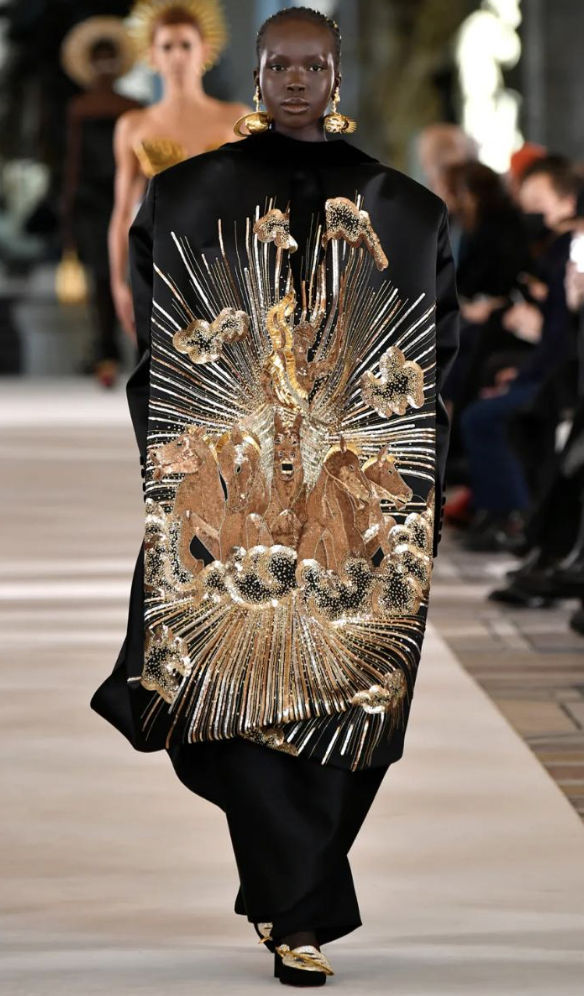
Houses such as Schiaparelli have built a reputation around this sculptural approach, creating surrealist pieces where garments almost become objects. Gilded anatomical jewellery, moulded corsets and dramatic structural gowns turn the body into something resembling a living statue. In a similar way, the futuristic creations of Mugler often look like metallic armour or futuristic sculptures, blurring the boundary between the body and the garment.
Archival Couture as Historical Art
Another way to interpret the idea that fashion is art is through fashion’s own history. Many couture houses have produced garments that now sit in museum archives and exhibitions. Wearing these pieces is not simply about style. It is also about presenting a piece of fashion history.
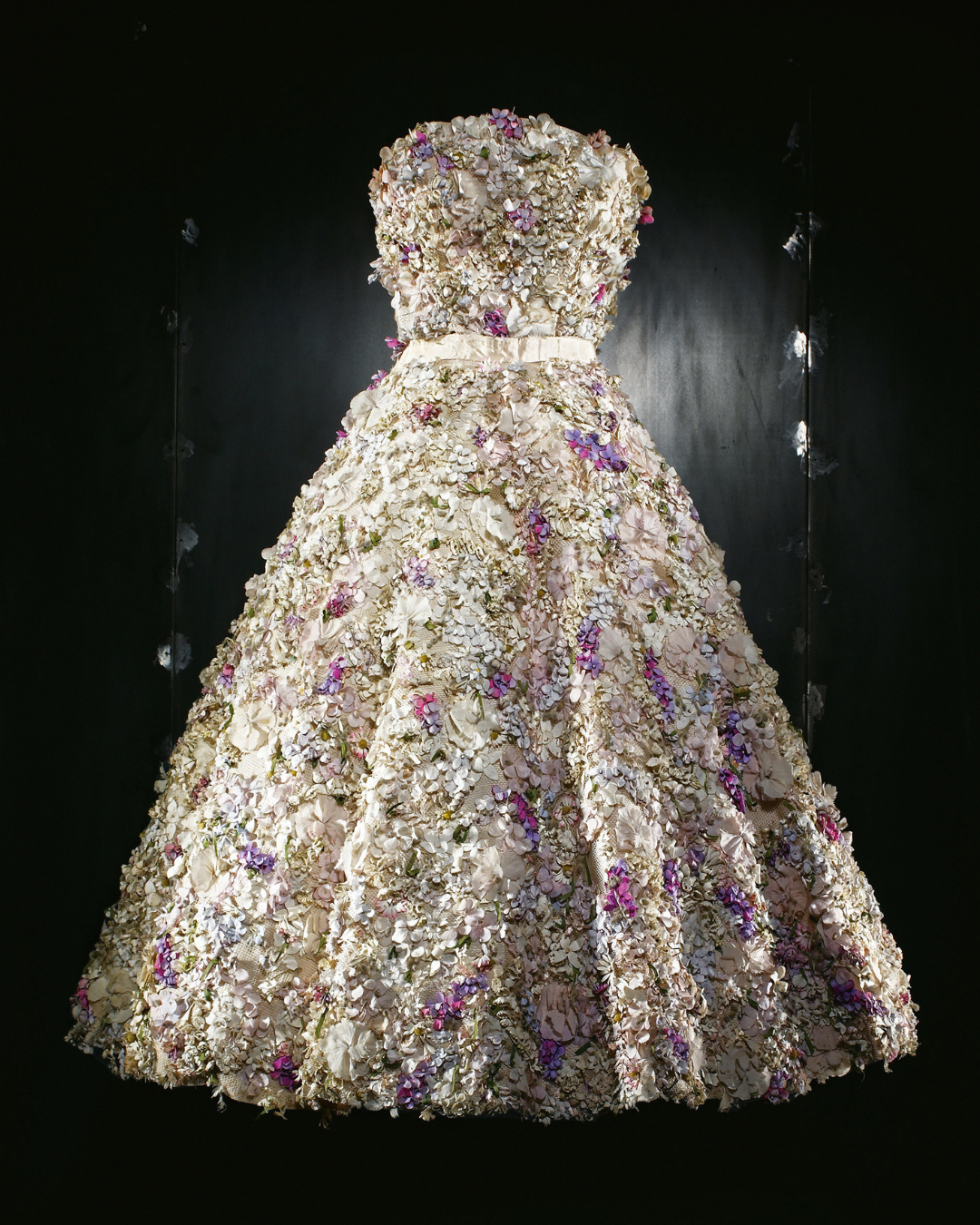
Dior Spring/Summer trompe-l'oeil line 1949
Christian Dior famously drew inspiration from the impressionist gardens of Claude Monet in his Spring/Summer 1949 collection.
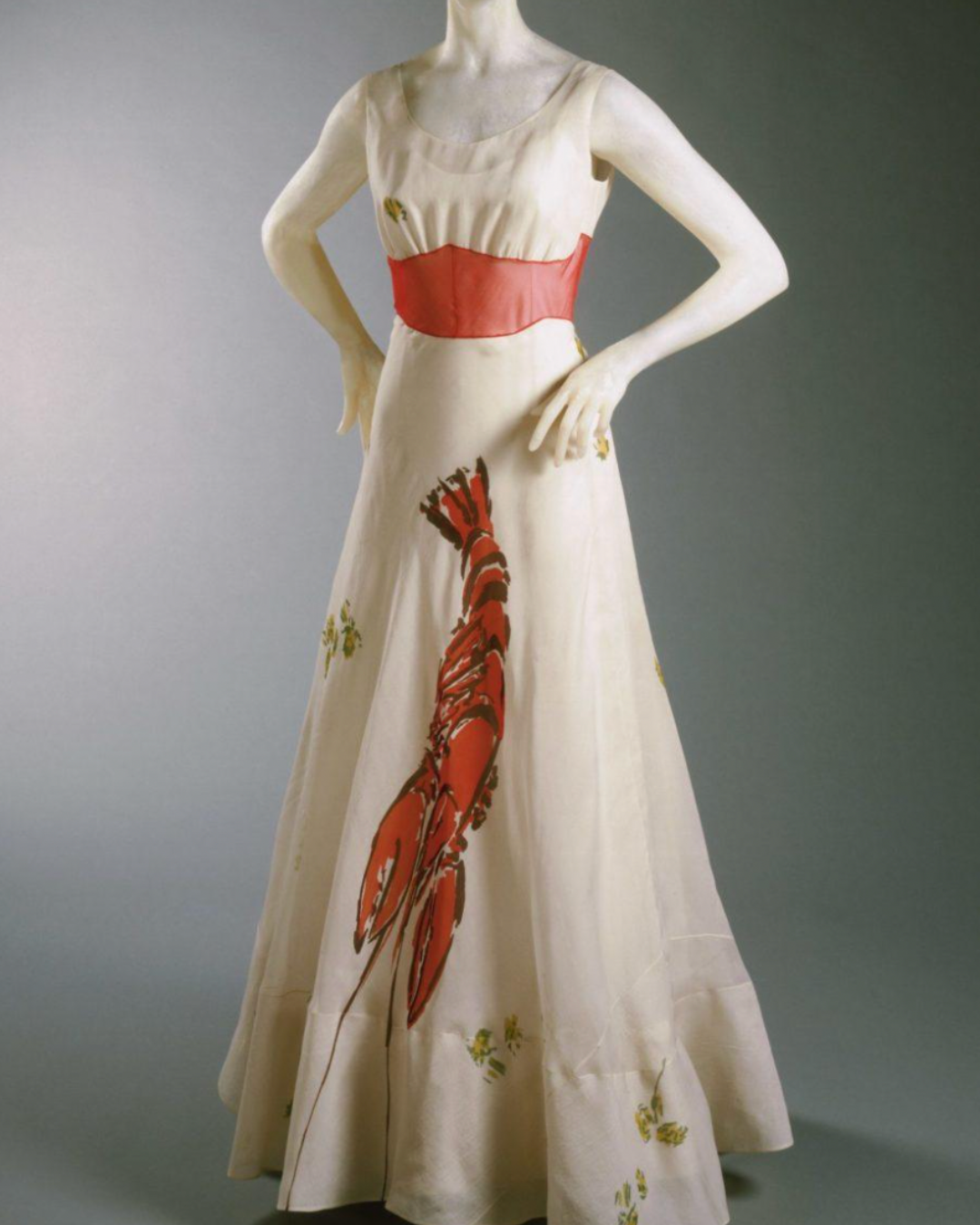
Schiaparelli Lobster Dress
The surreal collaboration between Elsa Schiaparelli and Salvador Dalí produced the famous lobster dress in 1937, merging surrealist imagery with couture.
Vivienne Westwood similarly drew inspiration from the rococo paintings of François Boucher in her Autumn/Winter 1990 collection Portrait, translating the soft pastel tones and romantic imagery of Boucher’s work into corseted gowns and draped fabrics.
Costume, Performance and Theatricality
Because the exhibition theme centres on costume, theatricality will likely play a significant role. Fashion moves beyond everyday clothing and enters the territory of performance and storytelling.
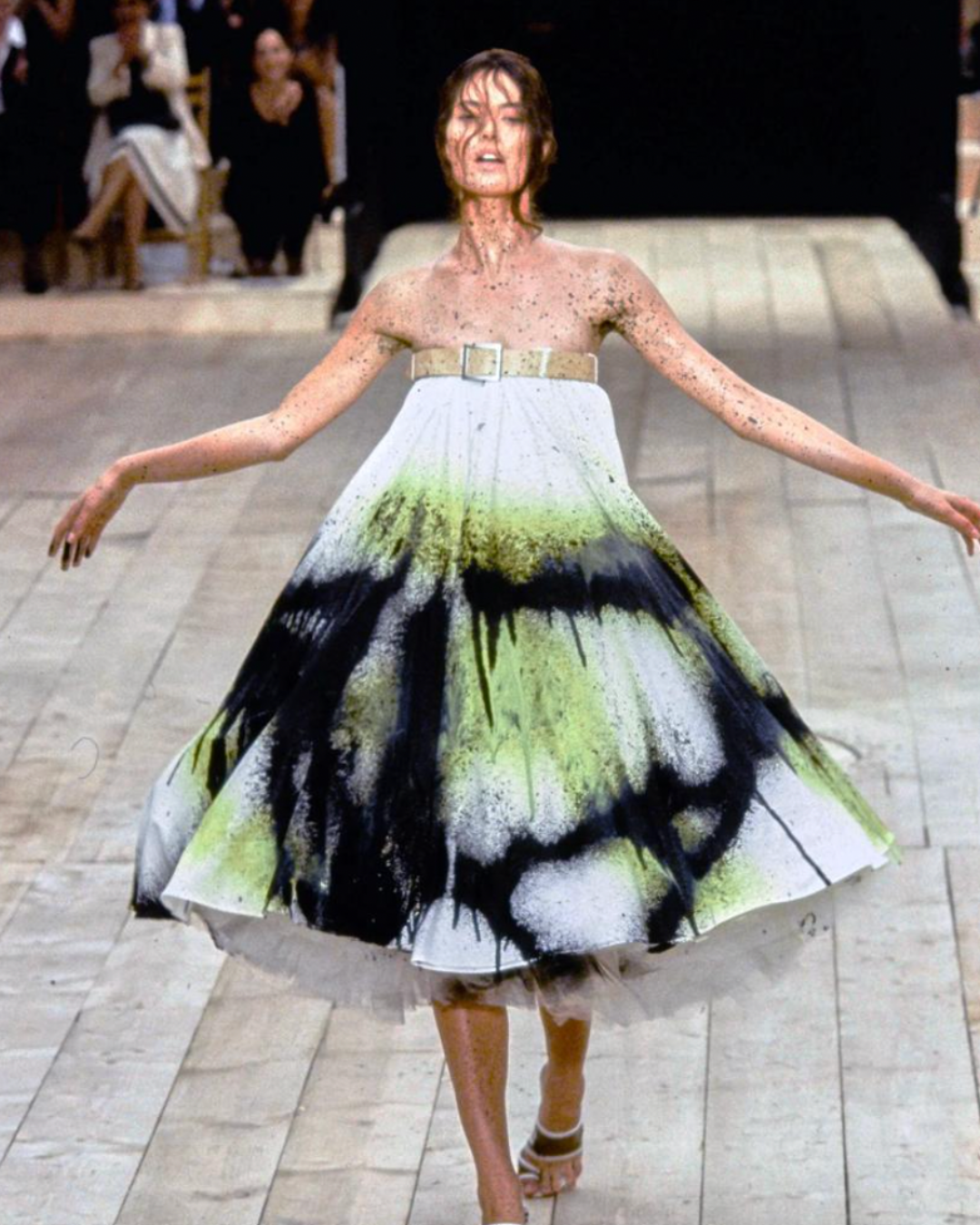
Alexander McQueen’s No.13 dress
Designers have long explored this relationship between fashion and performance. John Galliano’s Autumn/Winter 1997 couture for Dior transformed the runway into a theatrical spectacle inspired by historical costume. Similarly, Alexander McQueen’s Spring/Summer 1999 collection No.13 famously featured a model whose dress was spray painted live on the runway, turning the garment into a piece of performance art.
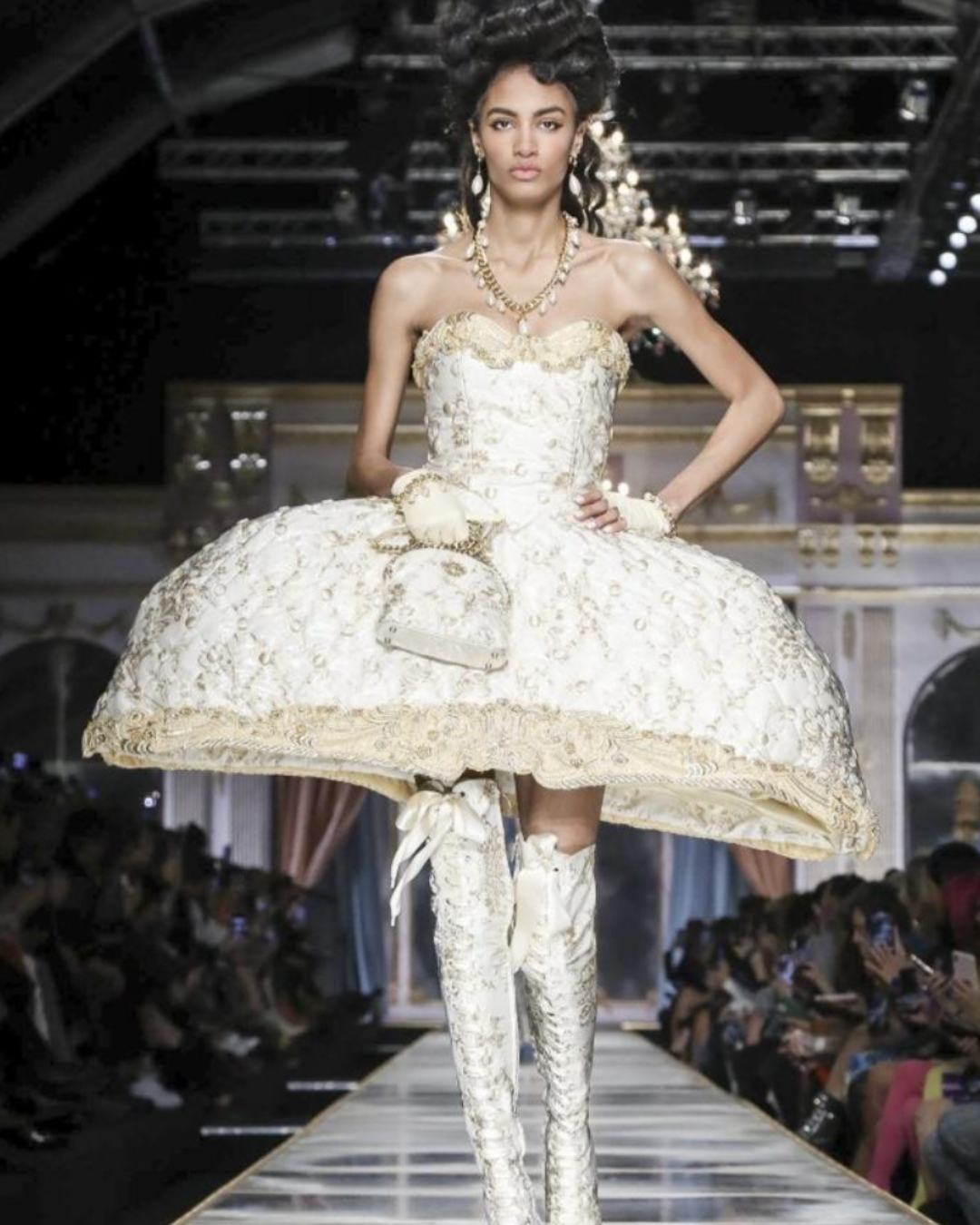
Moschino AW20
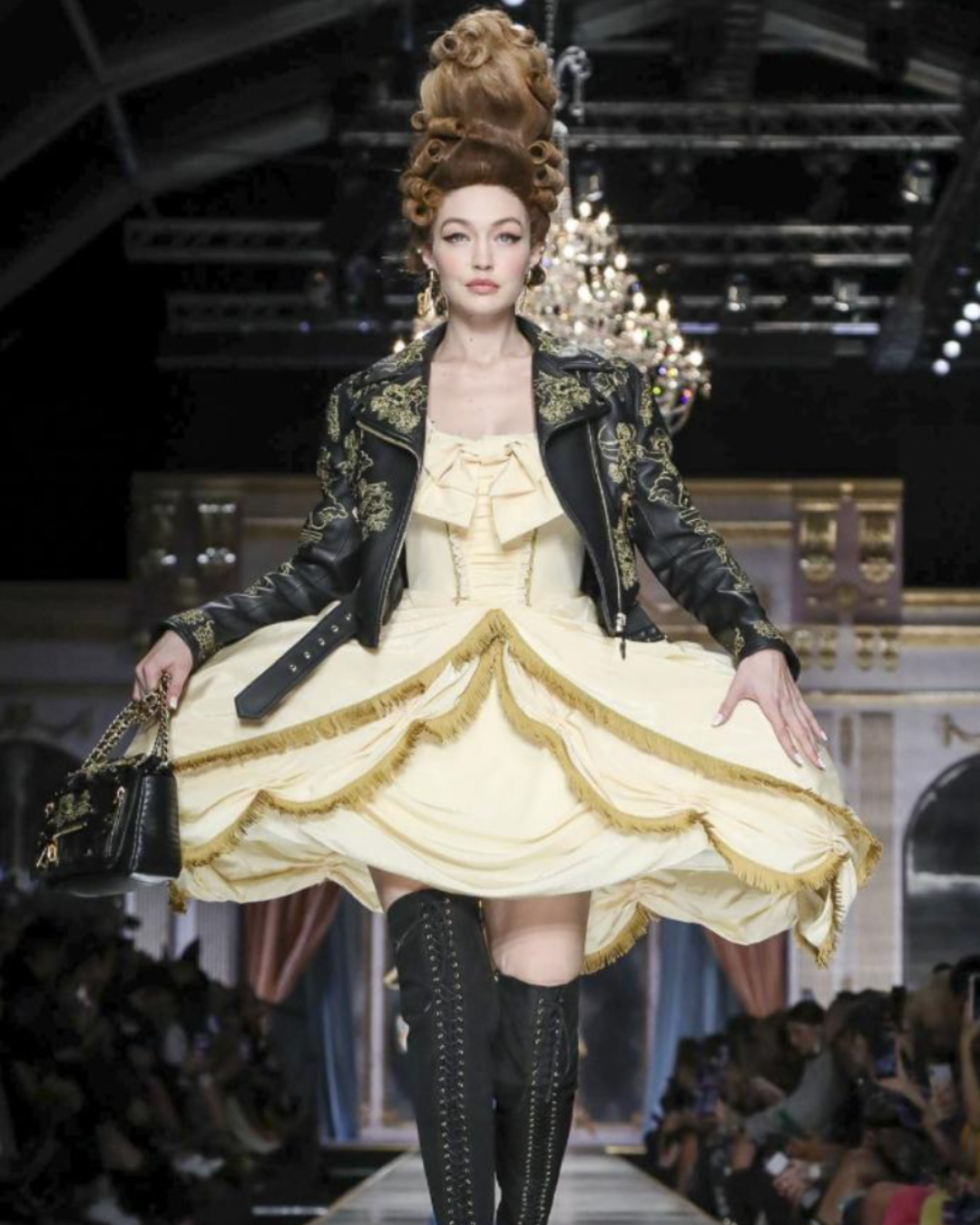
The idea of costume as artistic expression also appears in the work of Moschino, particularly in its Autumn/Winter 2020 collection under Jeremy Scott, where garments referenced puppetry and theatre. Designers such as Maison Margiela, especially under John Galliano for the Spring/Summer 2024 couture collection, have also explored dramatic costume elements through masks, exaggerated silhouettes and stage like presentations.
In this sense, the Met Gala becomes a stage where fashion functions not only as design but also as performance.
A Living Gallery
In the end, the Met Gala carpet almost begins to feel like a living exhibition. Paintings appear through textiles, sculptures are recreated through couture and the human body becomes part of the artistic composition itself.
Under the idea that fashion is art, the boundaries between disciplines start to blur. A gown can function like a canvas. A silhouette can feel like sculpture. Even a single red carpet appearance can resemble a moment of performance.
For one evening, the museum does not simply display art. It watches it arrive, step by step, dressed in silk, embroidery and imagination.